
Volleyball Drills: 14 Proven Exercises for Better Performance

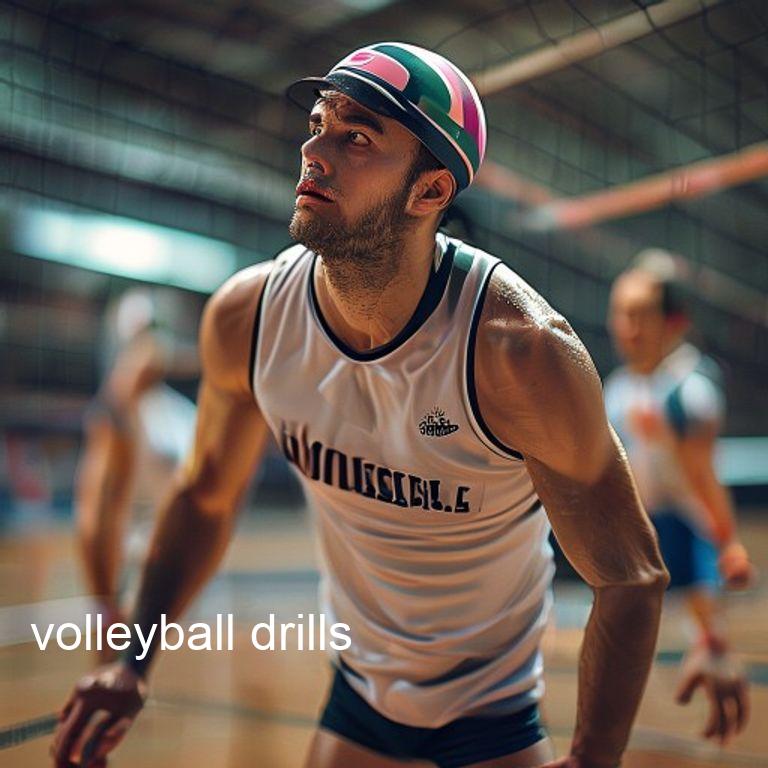
Table of Contents
Volleyball Drills: 14 Proven Exercises for Better Performance
Whether you are a high school athlete aiming for a college scholarship or a club player looking to dominate your local league, there is no shortcut to excellence. In volleyball, greatness isn’t born on game day; it is forged during the grueling hours of volleyball practice. The difference between a player who shanks a pass and one who delivers a perfect set often comes down to muscle memory developed through repetitive, high-quality volleyball drills.
To reach the next level, you cannot simply play scrimmages. Scrimmaging teaches you how to win, but specific drills teach you how to play. In this comprehensive guide, we will break down 14 proven exercises designed to sharpen your passing, setting, hitting, and defensive transitions. By integrating these into your routine, you will build the technical foundation necessary to compete at a high level.
For more insights into various athletic disciplines and training methodologies, check out our sports category.
Why Structured Volleyball Drills are Essential for Growth
Many amateur players fall into the trap of “playing” rather than “training.” While playing games is fun, it lacks the isolation required to fix technical flaws. Structured drills allow you to focus on a single mechanical movement—such as the platform angle in passing or the approach footwork in attacking—without the chaos of a full six-on-six match.
According to developmental sports science, “deliberate practice”—practice that is purposeful and requires intense concentration—is the fastest way to achieve mastery. By utilizing specific volleyball drills, you move from conscious competence (thinking about every move) to unconscious competence (executing moves instinctively).
The Benefits of Targeted Skill Training
- Increased Muscle Memory: Repeating a motion under controlled conditions ensures your body reacts correctly during high-pressure rallies.
- Error Reduction: Isolation drills help identify whether a mistake is due to footwork, hand positioning, or timing.
- Enhanced Conditioning: High-intensity drills improve cardiovascular endurance and explosive lateral movement.
- Mental Toughness: Drills that simulate game scenarios prepare the mind for the psychological demands of competition.

14 Proven Volleyball Drills for Every Skill Level
We have categorized these exercises into four pillars of volleyball: Passing/Defense, Setting, Attacking, and Serving/Transition. For official regulation standards and coaching certifications, always refer to USA Volleyball.
Category 1: Passing and Defensive Drills
Passing is the foundation of every successful offense. If the first ball is not controlled, the setter cannot run a diverse offense.
1. The Butterfly Drill
This is a classic warming-up drill that improves movement and ball control. Players follow a pattern of serving, receiving, and shagging. It keeps everyone moving and emphasizes the transition from a defensive stance to an offensive ready position.
2. Toss-Pass-Move
A coach or partner tosses balls to various locations on the court. The player must move their feet to get behind the ball, square their shoulders to the target, and pass. This prevents the common mistake of “reaching” with the arms rather than moving the feet.
3. Deep Court Digging
To prepare for heavy hitters, players must practice digging balls hit from high velocity. This drill involves a coach hitting balls from a box or a designated area, forcing the defender to react to speed and spin.
4. Perimeter Defense
Players are assigned specific zones on the court. As the coach hits balls into these zones, players must communicate and move to cover their area, teaching defensive discipline and court awareness.
Category 2: Setting Drills
The setter is the quarterback of the team. Precision and consistency are non-negotiable.
5. Rapid Fire Setting
The setter stays at the net while a coach tosses balls rapidly from a cart. The goal is to maintain consistent height, distance from the net, and hand shape despite the fatigue.
6. Setting from the Transition
A setter must move from a defensive position to the net quickly. This drill requires the setter to sprint from the back row to the target area to receive a ball, simulating a real transition play.
7. Target Accuracy Drill
Place a hula hoop or a target basket on the left, middle, and right sides of the net. The setter must hit specific targets with their sets, forcing them to master different trajectories and speeds.
Category 3: Attacking and Hitting Drills
Hitting is about more than just power; it is about timing, approach, and finding the gaps in the block.
8. Approach Footwork Drills
Without a ball, players practice their 3-step or 4-step approach. This builds the explosive “penultimate step” required to convert horizontal momentum into vertical jump height.
9. Line and Angle Hitting
Using a coach or a ball machine, attackers practice hitting specific lines. This teaches players how to manipulate their wrist and hand contact to change the ball’s direction.
10. Block-to-Transition Drill
A player jumps to block a simulated attack, lands, and immediately transitions to the 10-foot line to prepare for an attacking approach. This mimics the high-intensity physical demands of a real rally.
11. Tip and Roll Drills
Not every ball should be swung hard. This drill teaches attackers how to use “soft” touches (tips and rolls) to exploit holes in a deep defense when a hard swing isn’t an option.
Category 4: Serving and All-Around Drills
12. Serving Under Pressure
Players must serve 10 balls in a row to a specific zone (e.g., Zone 1 or Zone 5). If they miss, the count resets. This builds the mental discipline needed during a tight set.
13. Serve Receive Patterns
A group of passers works together to receive a high volume of serves directed at specific passers. This improves communication and helps players learn how to “read” the server’s hand contact.
14. The “Wash” Drill
This is a high-level team drill. A side must win two rallies in a row to get a “point.” This simulates the exhaustion and mental fatigue of a long rally in a competitive match.

Summary Table of Drills
| Drill Name | Focus Area | Difficulty Level | Primary Objective |
|---|---|---|---|
| Butterfly Drill | Passing/Serving | Beginner | Warm-up & Movement |
| Toss-Pass-Move | Passing | Intermediate | Footwork Accuracy |
| Rapid Fire Setting | Setting | Advanced | Hand Strength & Consistency |
| Approach Footwork | Attacking | Beginner | Explosive Mechanics |
| Serving Under Pressure | Serving | Intermediate | Mental Fortitude |
Common Challenges in Volleyball Training
Even with the best volleyball drills, players often encounter plateaus. Understanding these hurdles is the first step to overcoming them.
- Plateauing Skills: When you stop seeing improvement, it is often because your drills have become too easy. You must introduce “chaos” or increased speed to force adaptation.
- Physical Fatigue: High-intensity training can lead to overuse injuries. It is vital to balance skill work with strength and mobility training.
- Mental Burnout: Repetitive drills can become monotonous. Coaches should vary the drills and incorporate competitive elements to maintain engagement.
Expert Tips for Maximizing Your Volleyball Practice
To get the most out of every volleyball practice, keep these professional insights in mind:
- Quality Over Quantity: Doing 50 perfect passes is better than doing 200 sloppy ones. If your form breaks down, take a break.
- Video Analysis: Use your phone to record your approach or your passing platform. What you think you are doing and what you are actually doing are often two different things.
- Focus on the “Why”: Don’t just go through the motions. Ask yourself, “Why am I moving my feet this way?” or “How does this hand position affect the ball’s trajectory?”
- Communicate Constantly: Even in drills, call the ball. Developing the habit of calling “Mine!” or “Out!” prevents collisions and confusion.
Common Mistakes to Avoid
Avoid these frequent errors that can hinder your progress:
- “Swinging” the Arms: In passing, many players swing their arms upward to get height. Instead, use your legs to drive the ball and keep your platform stable.
- Standing “Flat-Footed”: If you aren’t on the balls of your feet, you will always be too late to the ball. Always maintain a dynamic athletic stance.
- Ignoring Footwork: Many players try to fix their contact with their hands when the real issue is that their feet weren’t in the right position. Fix the feet, then fix the hands.
- Lack of Transition: Many players stand still after an attack. In modern volleyball, the transition from attacking to defending is as important as the attack itself.
Conclusion
Mastering volleyball is a journey of incremental gains. By implementing these 14 volleyball drills into your regular volleyball practice, you are building a toolkit of skills that will serve you in every match. Remember that consistency is the key; you won’t see a transformation overnight, but through disciplined, intentional training, you will eventually find yourself performing skills that once seemed impossible.
Stay focused, stay hungry, and keep training.
Frequently Asked Questions (FAQ)
How often should I practice volleyball drills?
For significant improvement, aim for at least 3-4 sessions per week. However, ensure you include rest days to prevent injury and allow for muscle recovery.
Can I do these drills alone?
Yes! Many drills, such as approach footwork, wall passing, and serving, can be done solo. However, drills involving teammates or coaches are essential for simulating game speed.
What is the most important skill in volleyball?
While every skill is vital, many coaches argue that passing (serve receive) is the most important, as it dictates the quality of the entire offense.
How do I increase my vertical jump for hitting?
Combine volleyball-specific approach drills with plyometric training (like box jumps and depth jumps) and lower-body strength training (squats and lunges).






Responses