
Rugby Training: 11 Powerful Exercises for Stronger Players

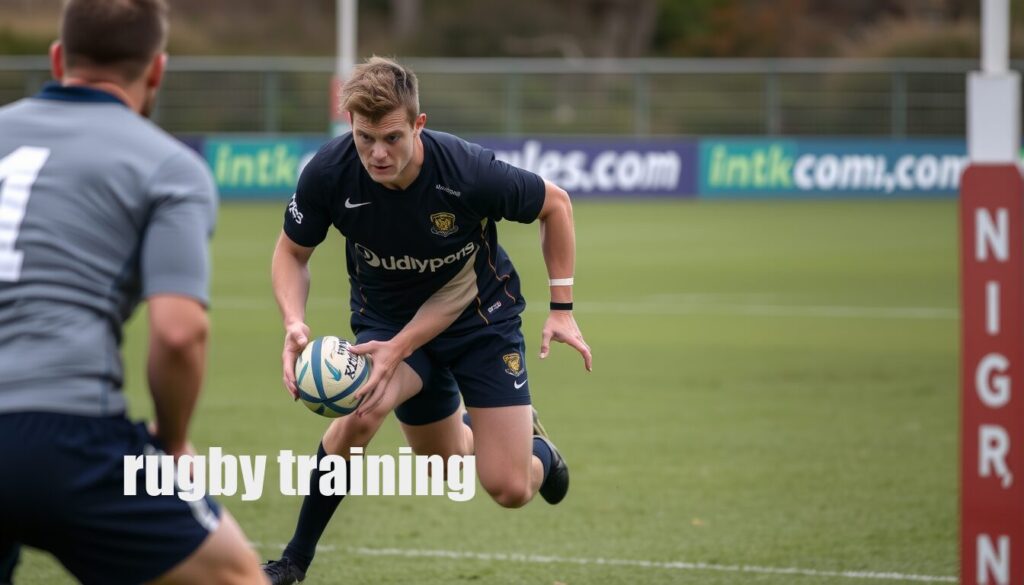
Mastering the Modern Game: A Complete Guide to Elite Rugby Conditioning and Skill Development
Introduction
Have you ever wondered why two athletes with identical technical skills can perform so differently when the pressure mounts in the final ten minutes of a match? The answer rarely lies in talent alone; it lives in the quality of their preparation. In the modern era, the gap between good and great is measured in milliseconds, kilograms, and decision-making accuracy under fatigue. Whether you are a weekend warrior looking to dominate your local league or a coach building a championship culture, understanding the science of physical preparation is non-negotiable.
At peoplestalk.net, we believe that trusted insights empower better performance across every facet of life. This topic is valuable because the sport has evolved into a high-speed collision chess match where aerobic capacity dictates cognitive function. If you neglect the engine, the chassis fails. Integrating a structured rugby training methodology with a science-backed rugby fitness approach is the single highest leverage point for any player or team right now.
Overview & Key Information
The landscape of the oval ball game has shifted dramatically over the last two decades. Gone are the days when forwards simply needed mass and backs simply needed pace. Today, every position demands a hybrid profile: high aerobic power, repeat-sprint ability, collision resilience, and neuromuscular control.
Defining the Modern Physical Demands
At its core, preparation for this sport is the systematic development of energy systems and movement patterns specific to the chaotic, intermittent nature of match play. A typical 80-minute contest involves:
- High-Intensity Bursts: Sprints, tackles, rucks, and mauls lasting 2–6 seconds.
- Incomplete Recovery: Average rest intervals of 20–40 seconds between high-intensity efforts.
- Locomotion Variety: Jogging, side-stepping, backward running, and grappling.
- Contact Load: Ground reaction forces often exceeding 8–10x body weight during collisions.
Positional Specificity vs. General Preparation
While the “game model” dictates the tactical framework, the physical curriculum must support it. Props and Hookers require supreme absolute strength and static power for the set-piece. Back-rowers and Centers need a blend of aerobic capacity and collision endurance. Half-backs and Fullbacks prioritize acceleration, change-of-direction (COD) speed, and high-speed running volume. However, the foundation—general physical preparation (GPP)—remains universal for the first 4–6 weeks of any off-season block.
| Physical Quality | Primary Energy System | Key Assessment Metric | Positional Priority |
|---|---|---|---|
| Aerobic Capacity | Oxidative | Yo-Yo IR2 / Bronco Test | All (High) |
| Maximal Aerobic Speed (MAS) | Oxidative / Glycolytic | 1200m Time Trial | Backs / Loose Forwards |
| Repeat Sprint Ability (RSA) | Phosphagen / Glycolytic | 6 x 30m (20s rest) | Backs / Outside Backs |
| Absolute Strength | Phosphagen | 1RM Squat / Bench / Pull | Front Row / Locks |
| Reactive Strength (RSI) | Phosphagen | Drop Jump / 10/5 Test | All (Injury Mitigation) |
Essential Requirements, Tools, & Resources
Before diving into periodization, you need the infrastructure to execute, track, and adjust. Elite environments have GPS, force plates, and velocity-based training (VBT) units. For the semi-pro or ambitious amateur, the “minimum viable kit” looks different but is equally effective if used consistently.
Hardware & Facility Access
- Barbell & Plates: Non-negotiable for compound lifts (Squat, Deadlift, Press, Pull).
- Open Space (40m+): Required for MAS intervals, speed gates, and conditioning games.
- Hill or Sled: The cheapest, most effective tool for acceleration mechanics and hamstring resilience.
- Heart Rate Monitor / GPS Watch: Essential for prescribing running intensities (Zone 2 vs. Threshold) and tracking load.
Software & Tracking Systems
- Training Peaks / Final Surge / Google Sheets: For periodizing weekly load (Acute:Chronic Workload Ratio).
- RPE (Rate of Perceived Exertion) Scales: The Session-RPE method (Foster et al.) remains the gold standard for internal load monitoring without expensive tech.
- Wellness Questionnaires: Sleep, soreness, mood, fatigue (1–5 scale) daily. This is your “check engine light.”
Human Resources & Prerequisites
- Medical Clearance: Especially cardiac screening and baseline concussion testing (SCAT6).
- Movement Competency: Ability to hinge, squat, lunge, push, pull, brace, and rotate without compensation. If you fail the overhead squat or single-leg RDL test, fix the movement before adding load.
- Nutritional Baseline: You cannot out-train a poor diet. Target 1.8–2.2g protein/kg body weight, periodized carbohydrate intake (high on heavy days, low on recovery), and hydration strategy.
Timeline, Process, & Important Considerations

Periodization is the architecture of progress. Without a timeline, you are just exercising, not training. The standard annual plan follows a undulating block periodization model, suitable for the Southern Hemisphere calendar (adjust months for Northern Hemisphere).
Phase 1: General Preparation (Off-Season: 8–12 Weeks)
Goal: Hypertrophy, structural balance, aerobic base, movement literacy.
- Frequency: 4–5 Gym sessions, 3–4 Running sessions (low intensity high volume).
- Focus: Accumulation. High volume (3–4 x 8–12 reps), tempos (3010), unilateral work.
- Running: Long slow distance (Zone 2), extensive tempo (70% max speed), MAS blocks (long intervals 3–5 mins).
Phase 2: Specific Preparation (Pre-Season Early: 6–8 Weeks)
Goal: Maximal Strength, Power conversion, High-Intensity Running tolerance.
- Frequency: 3–4 Gym (Heavy/Light or Upper/Lower), 3 Field sessions.
- Focus: Intensification. Lower volume (3–5 x 3–5 reps @ 80–90% 1RM), contrast training, plyometrics.
- Running: Intensive Tempo (85–95%), Short MAS intervals (30s–2min), Game-specific conditioning (small-sided games).
Phase 3: Competition Preparation (Pre-Season Late / Early Season: 4–6 Weeks)
Goal: Peak Power, Speed, Repeat Sprint Ability, Tactical sharpness.
- Frequency: 2–3 Gym (Maintenance/Power), 2–3 High Intensity Field, 1 Game.
- Focus: Realization. Velocity-based training (move fast), max velocity sprinting, low volume high intensity.
- Tapering: Reduce volume 40–60% week of major trials/games; keep intensity high.
Phase 4: In-Season Maintenance (20–30 Weeks)
Goal: Retain physical qualities, manage fatigue, injury prevention, peak for playoffs.
- Microcycle Structure (7-day):
- Game Day (GD)
- GD+1: Recovery / Mobility / Soft Tissue / Zone 2 Run (Active Recovery)
- GD+2: High Load (Heavy Lift + High Speed Running exposure)
- GD+3: Moderate Load (Power / Skill / Unit Work)
- GD-2: Low Load (Captain’s Run / Tactical /Team Announcements / Neural Primer)
- GD-1: Off / Mental Prep
- GD: Game
Detailed Explanation & Step-by-Step Guide

This is where theory meets the iron and the grass. Below is a practical, week-one template for the Specific Preparation Phase (Pre-Season). This assumes a Monday/Thursday gym split with Tuesday/Friday/Saturday field sessions.
Step 1: The Daily Readiness Check (Every Morning)
- Wake up, void bladder.
- HRV Reading (60 seconds, seated) via app (Elite HRV, HRV4Training).
- Wellness Questionnaire (Sleep Quality, Muscle Soreness, Energy, Mood, Stress) – Score 1-5.
- Decision Rule: If HRV drops > 1 standard deviation below baseline OR Wellness avg < 2.5 → Auto-regulate: Drop Gym Volume 30%, Conditioning Intensity to Zone 2.
Step 2: Gym Session A – Lower Body Knee Dominant / Upper Push (Monday)
| Exercise | Sets x Reps | Intensity / Tempo | Rest | Coaching Cue |
|---|---|---|---|---|
| A1. Box Squat (or Front Squat) | 4 x 4 | 80% 1RM / 30X0 | 2.5 min | Sit back, explode up. Pause on box. |
| A2. Pull-Ups (Weighted if possible) | 4 x 6-8 | RPE 8 / 2010 | 2.5 min | Full hang, chest to bar. Superset with A1. |
| B1. Romanian Deadlift (DB or BB) | 3 x 8 | RPE 8 / 3110 | 90 sec | Hinge pattern. Feel hamstring stretch. |
| B2. DB Bench Press (Neutral Grip) | 3 x 8 | RPE 8 / 2010 | 90 sec | Shoulder friendly. Squeeze scaps. |
| C1. Walking Lunges | 3 x 10/leg | BW + DBs | 60 sec | Knee over toe, torso upright. |
| C2. Half-Kneeling Landmine Press | 3 x 10/side | Moderate | 60 sec | Scapular upward rotation focus. |
| D. Core: Copenhagen Plank / Pallof Press | 3 x 30s / 10 | Bodyweight | 60 sec | Anti-rotation & Adductor strength. |
Step 3: Field Session – MAS Development (Tuesday)
Calculate your MAS (meters/second) from a recent 1200m or 2000m time trial. Prescribe intervals at 110–120% MAS.
- Warm-up: RAMP Protocol (Raise, Activate, Mobilize, Potentiate) – 15 mins.
- Main Set: 10 x 400m @ 115% MAS. Work:Rest = 1:1 (e.g., if 400m takes 75s, rest 75s).
- Cool Down: 5 min jog + breathing drills (Box breathing 4-4-4-4).
Step 4: Gym Session B – Lower Hip Dominant / Upper Pull (Thursday)
Focus on posterior chain and horizontal pulling.
- Main Lift: Trap Bar Deadlift 4 x 4 @ 80% (Fast concentric).
- Accessory: Single Leg RDL, Chest Supported Row, Weighted Dips, Nordic Hamstring Curl (2 x 5 eccentrics).
- Plyometric: Box Jumps 3 x 3 (Stick landing) / Hurdle Hops 2 x 4 (Continuous).
Step 5: High-Intensity Game Simulation (Saturday)
Small-Sided Games (SSG) are superior to straight line running for transfer.
- Format: 8v8 + 2 Floaters on 50m x 40m grid.
- Rules: 2-second touch limit (forces support), turnover = immediate counter-attack.
- Dosage: 4 x 4 mins, 3 mins passive rest. Target HR > 90% Max.
- Why: Develops decision-making under fatigue—the hallmark of elite rugby training environments.
Expert Tip: Velocity Based Training (VBT)
If you have a linear position transducer (like Vitruve or Output), use Mean Propulsive Velocity (MPV) zones instead of percentages.
- Strength-Speed: ~0.75–1.0 m/s
- Power: ~1.0–1.3 m/s
- Speed-Strength: > 1.3 m/s
Stop the set when velocity drops > 10% from the best rep in that set (Velocity Loss Threshold). This manages fatigue instantly.
Benefits, Advantages, & Key Features
Investing in a structured, evidence-based system yields returns far beyond the scoreboard. Here is the ROI of doing it right:
1. Injury Risk Reduction (The Availability Factor)
Research consistently shows high chronic workloads (built progressively) protect against soft-tissue injuries. The Nordic Hamstring Protocol alone reduces hamstring strain incidence by 51% (van Dyk et al., 2019). Stronger tendons, stiffer ankles, and competent landing mechanics keep you on the park. Availability is the best ability.
2. Cognitive Bandwidth Under Fatigue
When VO2 max and MAS are high, the relative intensity of match play drops. You operate at 75% of max capacity rather than 90%. This preserves prefrontal cortex function—allowing you to read the defensive line, execute the skip pass, or make the chop tackle in the 78th minute. Fatigue makes cowards of us all; fitness buys you courage.
3. Collision Dominance & Contact Confidence
Absolute strength and neck hypertrophy (via direct training) are your armor. A structured program ensures you enter contact with a stable trunk and powerful leg drive, winning the gain line and protecting the ball. This psychological edge—knowing you are physically prepared for the hit—changes how you play.
4. Longevity & Post-Career Health
Training movement quality (mobility, stability, unilateral strength) pays dividends long after the boots are hung up. Reducing joint degeneration, maintaining bone density, and preserving muscle mass (sarcopenia prevention) are the hidden trophies of a professional approach.
Alternative Approaches & Expert Tips
One size never fits all. Context—age, injury history, training age, facilities—dictates the best path.
Alternative 1: The “Hybrid” Concurrent Model (Time-Poor Athletes)
If you work 50 hours/week, you cannot do 10 sessions. Use a 3-day Full Body Split (Mon/Wed/Fri) + 1 Field Session (Sat).
- Gym: Squat/Hinge/Push/Pull/Core every session. 2 main lifts, 2 accessories. 60 mins max.
- Field: High Intensity Interval Training (HIIT) – 15 mins max (e.g., 10s Sprint / 50s Walk x 10).
- Trade-off: Slower peak potential, but high consistency. Consistency > Intensity sporadically.
Alternative 2: Block Periodization for Specialists
Advanced athletes (5+ training years) hit diminishing returns on concurrent training. Use 4-week blocks:
- Block 1: Strength Focus (4 lifting, 1 conditioning maintenance).
- Block 2: Power/Speed Focus (2 lifting maintenance, 3 speed/plyo).
- Block 3: Conditioning Focus (2 lifting maintenance, 4 MAS/RSA).
Expert Tip: The “Primer” Session (GD-1 or GD-2)
Don’t rest completely the day before a game. Do a 20-minute “Neural Primer”:
- 3 x 20m Build-up sprints (70, 85, 95%).
- 3 x Broad Jumps (Max intent).
- 3 x Med Ball Rotational Throws/side.
- 3 x Band Resisted Sprints (10m).
This potentiates the nervous system (PAP – Post-Activation Potentiation) without metabolic fatigue. You wake up Saturday feeling “snappy,” not sluggish.
Expert Tip: Heat & Altitude Acclimation
If traveling for playoffs, use passive heat exposure (Sauna 3x/week, 20 mins @ 85°C+) for 3 weeks prior. Increases plasma volume, reduces HR drift. For altitude (>1500m), arrive 10-14 days early or use Intermittent Hypoxic Exposure (IHE) tents.
Common Mistakes to Avoid
Even motivated athletes fall into traps. Here are the five most costly errors and how to fix them.
| Mistake | Why It Hurts | The Fix |
|---|---|---|
| 1. “Junk Volume” Running | Long slow jogs (Zone 3 “Grey Zone”) don’t improve MAS or RSA. They just accumulate fatigue without specific adaptation. | Polarize: Make easy days truly easy (Zone 1-2, nasal breathing) and hard days brutally hard (Zone 5+). Delete the middle. |
| 2. Neglecting Eccentric / Hamstring Prep | Sprinting and deceleration place massive eccentric load on hamstrings. Nordic curls are non-negotiable. | Program Nordics 2x/week year-round. Start with 2×4 (eccentric only), progress to 3×8-10. Use Razor curl / Slider variation if no partner. |
| 3. Maxing Out Too Often (Ego Lifting) | Testing 1RM weekly fries the CNS, increases injury risk, and doesn’t build strength—it demonstrates it. | Use Estimated 1RM (e1RM) via VBT or RPE. True 1RM test only 2x/year (Start/End Pre-season). Train at 70-85% mostly. |
| 4. Ignoring the “Top 2 Inches” (Neck & Trap) | Concussion risk and “stingers” correlate with neck circumference and strength. Most programs skip this. | Direct neck training 2x/week: 4-way Isometrics (Flex/Ext/Lat Flex), Banded Rotations, Shrugs/Farmer Carries. 5 mins total. |
| 5. Static Stretching Pre-Training | Long hold static stretching (>60s) pre-session reduces force production and power output for up to 60 mins. | Dynamic warm-up only pre-session (RAMP). Save static stretching / Yin Yoga for post-session or GD+1 recovery. |
Maintenance, Optimization, & Best Practices
The program works only if you adapt it. Here is how to keep the machine running smoothly for years.
Monitoring the Acute:Chronic Workload Ratio (ACWR)
Calculate Session RPE (Duration mins x RPE 1-10) = Arbitrary Units (AU).
- Acute Load: Sum of last 7 days.
- Chronic Load: Rolling 28-day average.
- Ratio: Acute / Chronic.
- Sweet Spot: 0.8 – 1.3. > 1.5 = Injury “Danger Zone”. < 0.8 = Detraining/Under-prepared.
Action: If Ratio spikes > 1.5 on GD+1, next session becomes active recovery only.
Quarterly Physical Testing Battery
Test don’t guess. Schedule 4 testing weeks per year (Start Off-season, Start Pre-season, Mid-season, End-season).
- Anthropometry: Skinfolds (ISAk), Body Mass.
- Strength: Isometric Mid-Thigh Pull (IMTP) or 3RM Trap Bar / Bench / Pull-up.
- Power: CMJ (Force Plate/Just Jump mat) – Height, RSI-modified.
- Speed: 10m, 20m, 40m splits (Timing Gates). Flying 10m for Max Velocity.
- Conditioning: Bronco / Yo-Yo IR2 / 1200m TT.
Track trends. A 5% drop in CMJ height over 4 weeks signals neuromuscular fatigue—deload immediately.
Nutrition Periodization (Fuel for the Work Required)
- Heavy Days (GD-2, GD+2): High Carb (5-7g/kg), Moderate Protein, Low Fat, High Fluid.
- Moderate Days: Moderate Carb (3-4g/kg), High Protein.
- Recovery Days (GD+1, Off): Low Carb (<2g/kg), High Protein (2.5g/kg), High Color (Antioxidants), Creatine (5g daily), Omega-3 (2-3g EPA/DHA), Vitamin D3 (4000 IU winter).
Sleep Hygiene: The Ultimate Legal PED
- Target 8-10 hours in bed (7-9 hours asleep).
- Cool room (18-20°C), Total darkness, White noise.
- Blue light blockers 90 mins pre-bed.
- Naps: 20 mins (power nap) or 90 mins (full cycle) early afternoon only. No late naps.
Conclusion
We have covered the architecture of elite preparation—from the macro cycles of periodization to the micro details of neck training and velocity loss thresholds. The evidence is clear: sustainable high performance is not an accident. It is the sum of a thousand small, disciplined choices made when nobody is watching. It is the decision to do the Nordics when your hamstrings burn. It is the discipline to stay in Zone 2 when your ego wants to sprint. It is the courage to deload when the data says “stop,” even if you feel “okay.”
Mastering this blend of science and grit transforms potential into production. It ensures that when the moment arrives—the overlap in the 79th minute, the defensive set on your own line, the restart to win the championship—your body is not the limiting factor. Your preparation has purchased you the freedom to play what is in front of you. By committing to a holistic rugby training philosophy and prioritizing your rugby fitness foundations, you build more than an athlete; you build a competitor who lasts.
The whistle is blowing. The preseason starts now. Share your biggest takeaway or your current weekly split in the comments below—let’s build a community of better athletes together.
FAQs
1. How do I balance gym and field sessions if I only have 4 days a week to train?
Use a High/Low model. Day 1: Heavy Lift + High Speed Running (High CNS). Day 2: Recovery / Mobility / Zone 2 Run (Low). Day 3: Power Lift + Conditioning Game (High). Day 4: Game or Simulated Game (High). This consolidates stress, allowing 3 full recovery days. Never put High days back-to-back if avoidable.
2. What is the single best exercise for rugby performance?
There isn’t one, but the Trap Bar Deadlift offers the highest ROI. It trains the hinge pattern (posterior chain), allows high loads with lower spinal shear force than a straight bar, mimics the “low body position” of contact, and transfers directly to sprint acceleration and tackle drive. Pair it with Nordics for the complete posterior package.
3. Should I do cardio (long runs) during the in-season?
Generally, no. The game is your cardio. High-intensity running and games maintain aerobic power. Adding long runs (Zone 2/3) on top of 1-2 games/week creates “interference effect” (molecular signaling conflict between AMPK and mTOR) and accumulates unnecessary leg fatigue. Use off-feet conditioning (Bike/Rower/SkiErg) for 15-20 mins Zone 2 on GD+1 if you need aerobic stimulus without joint load.
4. How important is body composition (body fat %) really?
It matters for power-to-weight ratio (speed, jump height) and thermoregulation. However, “chasing abs” mid-season destroys performance. Target ranges: Forwards 12-18%, Backs 8-14%. Manipulate body comp in Off-Season/Pre-Season only. In-season: Fuel performance. If skinfolds creep up, tighten nutrition slightly—don’t add extra cardio.
5. I keep getting injured (soft tissue). What is the first thing to audit?
Audit these three in order: 1. Spikes in Load: Check ACWR. Did you jump from 1000 AU/week to 1800 AU/week? 2. High-Speed Exposure: Are you hitting >95% Max Velocity at least once every 7-10 days? (Protects hamstrings via “repeated bout effect”). 3. Sleep/Nutrition: Are you consistently < 7 hrs sleep or < 1.6g protein/kg? Fix the foundation before adding fancy rehab exercises.





Responses