
Business in Logistics: How Top Companies Build Faster Supply Chains

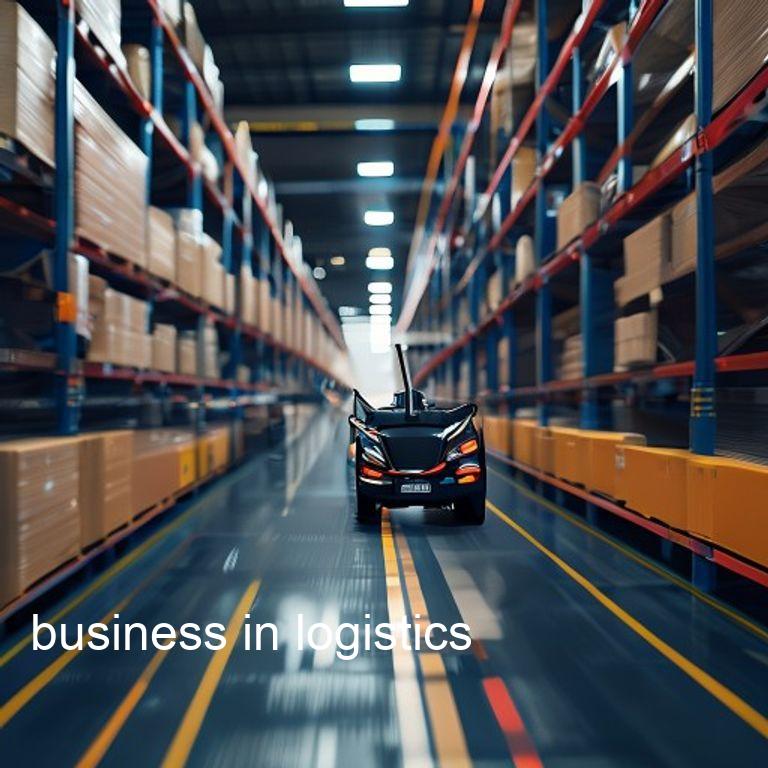
Table of Contents
- The Evolution of the Logistics Landscape
- Strategies Top Companies Use to Accelerate Supply Chains
- The Benefits of an Optimized Logistics Framework
- Critical Challenges Facing the Industry Today
- Expert Tips for Building a Resilient Supply Chain
- Common Mistakes to Avoid
- Conclusion
- Frequently Asked Questions (FAQ)
Business in Logistics: How Top Companies Build Faster Supply Chains
In the modern global economy, the distance between a manufacturer and a consumer has never been more complex. Every time you click “Buy Now” on an e-commerce platform, a silent, high-speed ballet of ships, trucks, warehouses, and algorithms begins. This is the heart of a business in logistics—a sector that has shifted from being a “back-office function” to a primary competitive advantage.
Historically, logistics was viewed as a cost center: a necessary expense incurred to move goods from point A to point B. Today, however, leaders like Amazon, Maersk, and FedEx have redefined the industry. They have proven that efficiency in the supply chain isn’t just about movement; it is about data, speed, and predictive intelligence. If you want to understand how a modern logistics operation maintains its edge, you must look at how they bridge the gap between demand and delivery.
In this comprehensive guide, we will dissect the mechanics of high-performance supply chains, the technologies driving the logistics business, and the strategic shifts necessary to build a resilient, lightning-fast operational framework.
The Evolution of the Logistics Landscape
To understand where we are going, we must understand where we started. The traditional model of a business in logistics relied heavily on manual documentation, telephone communication, and fixed routes. If a storm delayed a vessel or a truck broke down, the ripple effects were felt weeks later, often with little visibility for the end consumer.
The paradigm has shifted toward “Real-Time Visibility.” Modern companies no longer ask, “Where is my shipment?” instead, they monitor a digital twin of their entire supply chain. According to recent industry reports, companies that implement real-time tracking see a significant reduction in lost inventory and a marked increase in customer satisfaction levels.
Key Pillars of Modern Supply Chain Management
To build a faster supply chain, top-tier companies focus on four critical pillars:
- Procurement: Sourcing high-quality materials from reliable suppliers.
- Transportation: The physical movement of goods via sea, air, rail, or road.
- Warehousing: The strategic storage and management of inventory.
- Distribution: The final leg of the journey, ensuring goods reach the end-user efficiently.
Strategies Top Companies Use to Accelerate Supply Chains
Speed is the new currency. In an era of instant gratification, the ability to deliver a product within hours—or at least with pinpoint accuracy—determines market share. Here is how the industry leaders optimize their operations.
1. Leveraging Predictive Analytics and AI
The most successful players in the logistics business no longer react to problems; they predict them. Artificial Intelligence (AI) algorithms analyze historical data, weather patterns, and even social media trends to forecast demand. If AI predicts a spike in demand for a specific product in a certain region, companies can pre-position inventory in a nearby warehouse before the orders even come in.
2. The Shift Toward Decentralized Warehousing
The “Mega-Warehouse” model is being supplemented by a “Micro-Fulfillment” model. Instead of having one massive distribution center in the center of the country, companies are placing smaller, highly automated fulfillment centers in high-density urban areas. This minimizes the “last-mile” distance, which is traditionally the most expensive and slowest part of the journey.
3. Automation and Robotics in Warehousing
Human error and physical fatigue are natural limitations in any manual operation. To combat this, top companies integrate Autonomous Mobile Robots (AMRs) and Automated Storage and Retrieval Systems (AS/RS). These technologies allow for 24/7 operation and significantly higher picking accuracy, ensuring that the right product is in the right box every single time.
4. Multi-Modal Transportation Optimization
Relying on a single mode of transport is a recipe for disaster. A resilient business in logistics utilizes a mix of sea, air, and road, dynamically switching between them based on cost, urgency, and current disruptions. For example, during a port strike, a sophisticated logistics provider will automatically reroute high-priority shipments to air freight to maintain service level agreements (SLAs).
| Strategy | Primary Benefit | Implementation Complexity |
|---|---|---|
| Predictive Analytics | Reduced stockouts & excess inventory | High |
| Micro-Fulfillment | Faster last-mile delivery | Medium |
| Warehouse Automation | Increased picking speed & accuracy | High |
| IoT Integration | Real-time asset tracking | Medium |
The Benefits of an Optimized Logistics Framework
Investing in a highly efficient supply chain isn’t just about speed; it’s about the holistic health of the company. When a logistics business operates at peak performance, the benefits ripple through every department.
- Cost Reduction: Streamlined routes and optimized inventory levels mean less money wasted on fuel, storage, and emergency shipping fees.
- Improved Customer Experience: Accurate delivery estimates and the ability to track packages in real-time build immense consumer trust.
- Enhanced Scalability: A modular and digital-first supply chain allows a company to scale from 1,000 orders a day to 100,000 orders a day without the system collapsing.
- Risk Mitigation: With high visibility, companies can react instantly to geopolitical shifts, natural disasters, or supplier delays, minimizing the impact on the bottom line.
For more insights on strategic growth, you can explore our latest business insights.
Critical Challenges Facing the Industry Today
Despite the technological advancements, running a business in logistics is fraught with challenges. The industry is currently navigating a “perfect storm” of variables that can disrupt even the most sophisticated chains.
The Last-Mile Hurdle
The “Last Mile”—the movement of goods from a local hub to the customer’s doorstep—is notoriously inefficient. It accounts for a disproportionate amount of total shipping costs due to traffic congestion, failed delivery attempts, and the high cost of small-batch deliveries.
Labor Shortages and Rising Costs
The demand for skilled logistics managers, heavy-duty truck drivers, and warehouse technicians is at an all-time high. This talent gap leads to wage inflation, which directly impacts the margins of a logistics business. Companies must find ways to augment human labor with technology without losing the “human touch” required for complex problem-solving.
Sustainability and Regulatory Pressure
Environmental, Social, and Governance (ESG) criteria are no longer optional. Regulators and consumers are demanding “Green Logistics.” This means companies must find ways to reduce their carbon footprint through electric vehicle (EV) fleets, optimized routing to reduce fuel consumption, and sustainable packaging solutions.
Expert Tips for Building a Resilient Supply Chain
Based on industry trends and expert analysis, here is how you can ensure your operations remain robust in an unpredictable world.
- Diversify Your Supplier Base: Never rely on a single source for critical components. “Single-sourcing” is a major vulnerability. Even if it costs slightly more, having secondary and tertiary suppliers in different geographic regions is a vital insurance policy.
- Prioritize Data Integrity: Your AI is only as good as the data you feed it. Ensure your Warehouse Management Systems (WMS) and Transportation Management Systems (TMS) are integrated so that data flows seamlessly between them.
- Invest in “Human-Centric” Automation: Don’t look at automation as a replacement for people, but as a way to augment them. Use robots for the repetitive, heavy, and dangerous tasks, allowing your human talent to focus on strategic decision-making and relationship management.
- Focus on Agility over Lean-Only Models: For decades, “Just-in-Time” (JIT) was the gold standard. While efficient, JIT leaves zero room for error. The new standard is “Just-in-Case”—maintaining a strategic “buffer” of safety stock to absorb sudden shocks to the supply chain.
Common Mistakes to Avoid
In the rush to modernize, many companies fall into these common traps:
- Over-reliance on Legacy Systems: Trying to run a 21st-century supply chain on 20th-century software is a recipe for failure. If your systems don’t talk to each other, you are flying blind.
- Ignoring the Human Element: Technology is a tool, not a total solution. Companies that fail to train their workforce to work alongside new technologies often see a decline in morale and productivity.
- Focusing Solely on Cost Over Speed: While cost-cutting is important, an ultra-cheap supply chain that is slow and unpredictable will eventually lose its customer base to a faster competitor.
- Lack of End-to-End Visibility: Many companies optimize their own warehouse but have no idea what is happening with their freight carriers. You need visibility across the entire ecosystem, not just within your four walls.
Conclusion
The landscape of a business in logistics has undergone a radical transformation. What was once a physical struggle of moving boxes is now a digital battle of moving information. The companies that win in this new era are those that view logistics not as a burden, but as a strategic lever to drive speed, reliability, and customer loyalty.
By embracing predictive analytics, investing in strategic warehousing, and preparing for the inevitable disruptions of a globalized economy, you can build a supply chain that is not just fast, but resilient. The future of logistics belongs to those who can turn data into movement and movement into value.
Frequently Asked Questions (FAQ)
What is the most important factor in modern logistics?
Visibility. The ability to track goods in real-time across all modes of transport is crucial for managing risks and meeting customer expectations.
How is AI changing the logistics business?
AI enables predictive demand forecasting, optimizes delivery routes to save fuel, and powers autonomous robots in warehouses, significantly increasing efficiency.
What is ‘Last-Mile Delivery’ and why is it difficult?
Last-mile delivery is the final step of the delivery process from a distribution center to the end consumer. It is difficult due to high costs, urban traffic, and the complexity of individual residential deliveries.
How can companies make their supply chains more sustainable?
Companies can implement electric vehicle fleets, use AI to optimize routes (reducing fuel consumption), and adopt circular economy principles such as using recyclable packaging.







Responses