
Hockey Training: 13 Proven Drills to Boost Your Skills

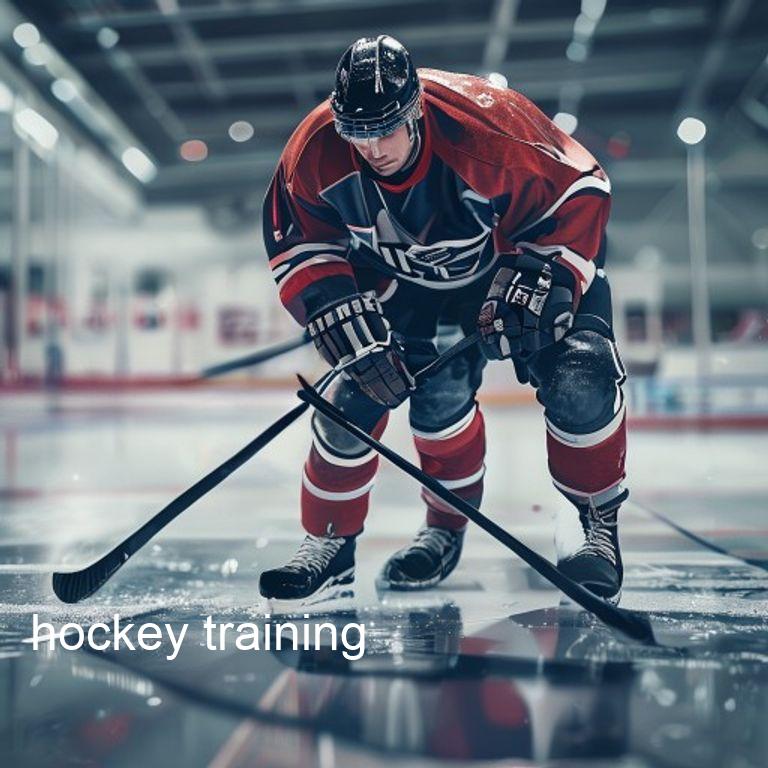
Table of Contents
- The Science of Skill Acquisition in Hockey
- Comprehensive Skill Breakdown: What to Focus On
- 13 Proven Hockey Training Drills
- The Benefits of Structured Hockey Training
- Common Challenges in Player Development
- Expert Tips for Maximum Improvement
- Common Mistakes to Avoid
- Conclusion
- Frequently Asked Questions (FAQ)
Hockey Training: 13 Proven Drills to Boost Your Skills and Game Intelligence
Whether you are a weekend warrior in a local beer league or an aspiring professional aiming for the NHL, the difference between a good player and an elite one often comes down to what happens when the lights are off. Mastery in ice hockey isn’t born during the game; it is forged during intense, repetitive, and purposeful hockey training sessions.
To reach the next level, you cannot simply show up to every hockey practice and hope for the best. You need a structured approach that targets specific physiological and technical skill sets: edge work, puck handling, shooting accuracy, and situational awareness. In this comprehensive guide, we will break down 13 proven drills designed to transform your performance on the ice, backed by training principles used by elite athletes.
The Science of Skill Acquisition in Hockey
Before we dive into the drills, it is essential to understand how skill acquisition works. In high-intensity sports, the brain develops “muscle memory” through a process called myelination. When you repeat a specific movement—like a snap shot or a crossover—the neural pathways responsible for that action become more efficient. This is why “deliberate practice” is superior to “casual practice.”
When performing hockey training, you shouldn’t just go through the motions. You must focus on the “why” behind every movement. Are you leaning into your edges? Is your weight centered? Are your eyes up to scan the ice? This mental engagement is what separates professional-grade training from mere physical exertion.
Comprehensive Skill Breakdown: What to Focus On
To become a complete player, your training must be balanced across four primary pillars. If you neglect one, your overall game will suffer.
| Skill Pillar | Focus Area | Goal |
|---|---|---|
| Skating | Edge work, Acceleration, Agility | Dominating positioning and speed |
| Puck Control | Stickhandling, Tight Turns, Receiving | Protecting the puck under pressure |
| Shooting | Release speed, Accuracy, Power | Beating the goalie from any angle |
| Game IQ | Vision, Positioning, Decision Making | Predicting plays before they happen |
13 Proven Hockey Training Drills
1. The Figure-Eight Edge Work (Skating)
Edge control is the foundation of elite skating. Without it, you cannot turn effectively or maintain balance during heavy contact. To perform this drill, set two cones about 10 feet apart. Skate in a figure-eight pattern around the cones, focusing exclusively on using your inside and outside edges to carve smooth, tight turns. This builds the stabilizer muscles in your hips and ankles.
2. The Slalom Dribble (Puck Handling)
Set up a line of cones (or pucks) in a straight line, spaced about 3 feet apart. Weave through them as fast as possible while keeping your head up. The key here is not just moving the puck, but moving the puck *away* from your body to simulate shaking off a defender. This is a staple in every professional hockey practice to improve puck protection.
3. The Rapid-Fire Snap Shot (Shooting)
Don’t just aim for the net; aim for the corners. Set up a target (like a piece of tape) in the top corners of the net. Practice shooting from a stationary position, then progress to shooting while in motion. The goal is a “quick release”—getting the puck off the stick before the defender can close the gap.
4. The Transition Drill (Agility)
In modern hockey, the game is played in transition. Skate forward toward a cone, perform a hard pivot (crossover) to change direction, and then accelerate hard toward the next target. This trains your body to switch from offensive to defensive momentum instantly.
5. The Tight Space Weave (Puck Handling)
Instead of wide turns, use the area around the faceoff circles. Practice maneuvering through high-traffic zones with minimal space. This simulates the “cluttered” environment of a game, teaching you how to keep the puck close to your blade when defenders are breathing down your neck.
6. The Backside Edge Carry (Skating)
One of the hardest skills to master is skating backward with power. Set a course where you must travel backward, utilizing deep edges to maintain speed. This is vital for defensemen playing the points and forwards battling in the corners.
7. The One-Handed Stickhanding (Puck Control)
Hold your stick with only your top hand (the hand closest to the blade). This forces you to use your core and lower body to stabilize the puck, rather than relying solely on your bottom hand to “guide” it. It builds incredible forearm and grip strength.
8. The Deception Drill (Shooting)
Practice “fake shots.” Start your shooting motion as if you are going for a heavy slap shot, then quickly transition into a wrist shot or a tap-in. Deception is what makes players like Connor McDavid so difficult to defend; they manipulate the goalie’s expectations.
9. The Perimeter Scramble (Agility/Puck Control)
Scatter several pucks around the zone. Sprint to a puck, pick it up, carry it around a cone, and drop it. Repeat. This simulates the high-intensity bursts and “scrambling” required during board battles and loose puck situations.
10. The Rapid Pivot (Skating)
Focus on the transition from forward to backward skating. Practice “crossovers” to maintain speed during the turn. This drill is essential for maintaining defensive positioning while tracking an oncoming attacker.
11. The Pocket Shooting Drill (Shooting)
The “pocket” is the area just above the blade of the stick. Practice taking shots by using the whip of the stick from this position. This generates maximum velocity with minimal wind-up, making your shot much harder for goalies to track.
12. The Wall Battle Simulation (Puck Control)
Practice driving hard toward the boards and using your body to shield the puck. This combines physical strength with puck protection, ensuring you don’t lose possession when the game gets heavy.
13. The Vision Scan Drill (Game IQ)
While performing any puck-handling drill, you must look away from the puck. Train yourself to look at the “horizon”—the far end of the rink—every few seconds. If you can’t see the ice, you can’t make the play.
The Benefits of Structured Hockey Training
Investing time into these drills offers more than just “better skills.” The benefits are holistic:
- Injury Prevention: Strengthened muscles and improved joint stability (especially in the hips and ankles) significantly reduce the risk of groin and knee injuries.
- Increased Stamina: High-intensity interval training (HIIT) integrated into hockey training improves your VO2 max, allowing you to play long shifts without a drop in performance.
- Enhanced Confidence: When you know your edge work is perfect and your release is lightning-fast, you play with a psychological edge. You stop thinking about the mechanics and start thinking about the game.
- Faster Decision Making: As motor skills become automatic, your cognitive load decreases, allowing you to process the game at a much higher speed.
Common Challenges in Player Development
Even with the best drills, players often hit walls. Understanding these challenges can help you overcome them:
The Plateau Effect
You may feel like you aren’t improving after weeks of hard work. This is normal. Improvement in sports is rarely linear; it’s a series of jumps. When you hit a plateau, it’s often time to change the intensity or the focus of your training.
Overtraining and Burnout
More is not always better. Overtraining can lead to chronic fatigue and injury. Professional programs emphasize recovery just as much as the training itself. Sleep and nutrition are non-negotiable components of any elite program.
Technical Regression Under Pressure
Many players look like pros in a solo drill but lose their technique during a game. This happens because their “skill” isn’t deeply ingrained. To combat this, you must increase the complexity and speed of your drills as you progress.
Expert Tips for Maximum Improvement
As someone who has studied athletic performance patterns, I recommend following these “Golden Rules” of training:
- Quality Over Quantity: Ten perfect repetitions are worth more than a hundred sloppy ones. If your form breaks down, stop the drill and reset.
- Record Yourself: Use a smartphone to film your skating or shooting. You might think you are leaning into your edges, but the video will tell the truth.
- Focus on the “Small” Muscles: Don’t just lift heavy weights. Focus on grip strength, forearm endurance, and ankle stability. Hockey is a game of leverage.
- Cross-Train: Incorporate sports like [soccer](https://www.nba.com/) (to improve footwork) or general strength training to build a robust physical foundation.
Common Mistakes to Avoid
Avoid these pitfalls to ensure your training time is productive:
- Looking at the Puck: This is the #1 mistake. If your eyes are on your blades, you are blind to the game.
- Ignoring Your Backside: Many players focus entirely on forward speed and neglect backward agility. This makes them easy to exploit defensively.
- Training Without Intensity: If you aren’t sweating and breathing hard, you aren’t training; you’re just skating. You must mimic game intensity.
- Neglecting the “Weak” Side: If you are right-handed, you must spend 50% of your time practicing left-handed shots and puck handling. A one-handed player is easy to defend.
Conclusion
Becoming an elite hockey player is a marathon, not a sprint. It requires discipline, a willingness to embrace repetitive drills, and a commitment to constant self-assessment. By integrating these 13 drills into your regular hockey practice, you are building the technical and physical foundation required to dominate on the ice.
Remember, greatness is found in the details. Master your edges, refine your release, and always, always keep your head up. For more insights into athletic development and sports psychology, check out our sports category.
Frequently Asked Questions (FAQ)
How often should I do these hockey training drills?
For recreational players, 2-3 times a week is sufficient. For competitive/elite players, these drills should be integrated into daily sessions, with emphasis on recovery to prevent injury.
Do I need an ice rink to do this training?
Not necessarily. While edge work requires ice, most puck handling, shooting, and agility drills can be performed on “synthetic ice” or even a driveway with a puck and a bucket.
Can these drills help if I’m a defenseman?
Absolutely. In fact, defensemen benefit immensely from the emphasis on backward skating, edge work, and stickchecking drills found in this guide.
How long should a typical training session be?
A high-intensity session should be between 45 and 90 minutes. Beyond 90 minutes, the quality of movement tends to drop, which can lead to poor habits and injury.

Responses