
Technology That Is New: 14 Breakthrough Innovations Changing the Future

Table of Contents
Technology That Is New: 14 Breakthrough Innovations Changing the Future
We are living in an era of unprecedented acceleration. Every few months, a discovery in a laboratory or a software update in a Silicon Valley startup ripples through the global economy, altering how we work, communicate, and solve existential threats. When we discuss technology that is new, we aren’t just talking about faster smartphones; we are talking about fundamental shifts in the fabric of human reality.
From the way artificial intelligence mimics human cognition to the way quantum computers process data in nanoseconds, the landscape of innovation is shifting. For professionals, investors, and curious minds, staying ahead of these trends is no longer a luxury—it is a necessity. In this deep dive, we will explore 14 breakthrough innovations that are defining the next decade of human progress.
To stay updated on the latest shifts in the digital landscape, you can explore our dedicated technology insights section. For high-level academic and industrial research, MIT Technology Review remains a gold standard for scientific scrutiny.
The Dawn of the Cognitive Era: AI and Beyond
The most visible emerging technology today is undoubtedly Generative Artificial Intelligence. We have moved past simple rule-based algorithms into an era where machines can create art, write complex code, and simulate nuanced human conversation. This is not a passing fad; it is the foundational layer for all future digital interactions.
1. Generative Artificial Intelligence (GenAI)
Generative AI has moved from novelty to necessity. Large Language Models (LLMs) like GPT-4 and Claude are transforming industries by automating content creation, legal analysis, and software engineering. According to recent industry reports, Generative AI could add trillions of dollars in value to the global economy through increased productivity.
- Hyper-personalization: AI creates marketing content tailored to individual user behavior in real-time.
- Rapid Prototyping: Engineers use AI to simulate thousands of design iterations in seconds.
- Coding Assistance: Software developers are using AI pairs to write boilerplate code, allowing them to focus on architecture.
2. Neuromorphic Computing
Traditional computing follows the Von Neumann architecture, where memory and processing are separate. Neuromorphic computing seeks to mimic the human brain’s structure. By using “spiking neural networks,” these chips process information similarly to biological neurons, making them incredibly energy-efficient and capable of real-time learning without massive data center footprints.
3. Quantum Computing
While classical computers use bits (0 or 1), quantum computers use qubits, which can exist in multiple states simultaneously due to superposition. This allows for solving problems that would take a classical supercomputer thousands of years, such as molecular modeling for drug discovery or breaking high-level encryption.
| Feature | Classical Computing | Quantum Computing |
|---|---|---|
| Basic Unit | Bit (0 or 1) | Qubit (Superposition) |
| Processing Speed | Linear/Sequential | Exponential/Parallel |
| Primary Use Case | Daily computing, web, gaming | Cryptography, molecular simulation |
The Physical Frontier: Robotics and Spatial Computing
The intersection of digital intelligence and physical movement is where the most tangible changes in our daily lives will occur. As technology that is new integrates with mechanical bodies, the “automation of everything” becomes a reality.
4. Humanoid Robotics
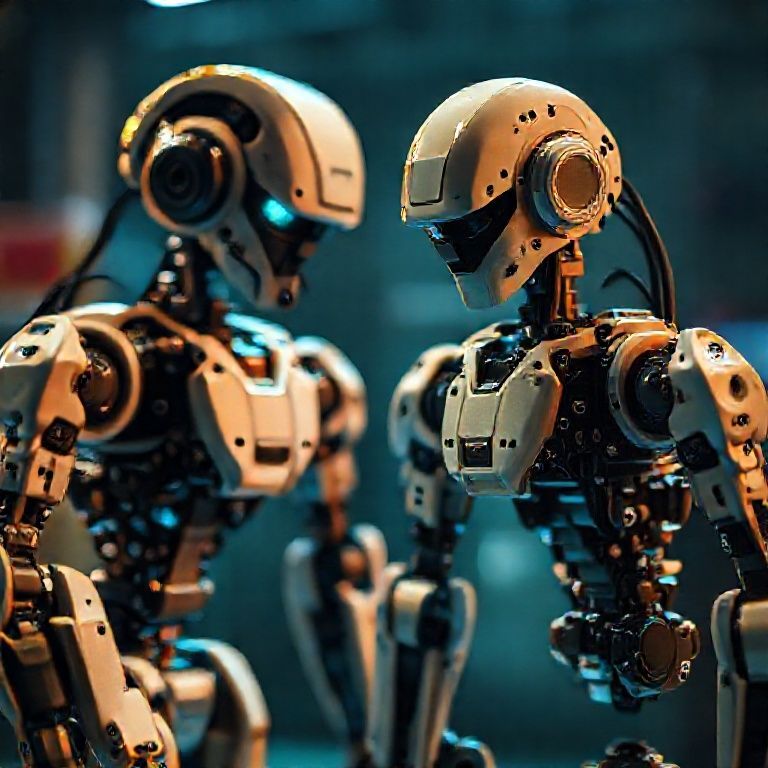
We are witnessing the birth of the “General Purpose Robot.” Companies like Tesla (Optimus) and Figure AI are developing humanoids designed to work alongside humans in factories, warehouses, and eventually, our homes. These robots use advanced computer vision and LLMs to understand verbal commands and navigate complex environments.
5. Augmented and Mixed Reality (AR/MR)
Spatial computing is moving us away from 2D screens toward 3D environments. Instead of looking *at* a computer, you will live *inside* the interface. This technology overlays digital information onto the physical world, revolutionizing training, surgery, and remote collaboration.
6. Autonomous Vehicles and Drone Delivery
Self-driving technology has moved beyond just cars. We are seeing the emergence of autonomous logistics networks where drones and ground-based robots handle the “last mile” of delivery, reducing costs and carbon footprints in urban logistics.
Sustainable and Biological Revolutions
To solve the climate crisis and the aging population crisis, we must look toward the biological and environmental sciences. Emerging technology in these fields is often the most disruptive because it touches our very DNA.
7. CRISPR and Gene Editing
CRISPR-Cas9 technology allows scientists to “cut and paste” DNA sequences with unprecedented precision. This has the potential to cure genetic diseases like sickle cell anemia, engineer drought-resistant crops, and even combat cancer through personalized immunotherapy.
8. Green Hydrogen Energy
As the world moves away from fossil fuels, green hydrogen—produced via electrolysis powered by renewable energy—offers a way to decarbonize “hard-to-abate” sectors like steel manufacturing and heavy shipping.
9. Next-Generation Battery Tech (Solid-State)
Current lithium-ion batteries are reaching their limit. Solid-state batteries promise higher energy density, faster charging times, and improved safety, which will be the catalyst for the mass adoption of electric aviation and long-range EVs.
10. Synthetic Biology
This is the design of new biological parts, devices, and systems. It’s the ultimate form of manufacturing, where we “grow” materials—like lab-grown meat or bio-fabricated leather—rather than extracting them from the earth.
Connectivity and the Digital Layer
None of the aforementioned breakthroughs can reach their full potential without the infrastructure to support them. This is the “connective tissue” of the future.
11. 6G and Beyond
While 5G is still being deployed, 6G research is already underway. 6G will provide the ultra-low latency required for real-time teleoperation (controlling a robot from thousands of miles away) and massive IoT (Internet of Things) connectivity.
12. Decentralized Web (Web3 and Blockchain)
Beyond cryptocurrency, blockchain technology provides a way to establish trust in a digital-first world. Decentralized identifiers and smart contracts allow for a user-owned internet, reducing the dominance of centralized platforms.
13. Edge Computing
To make AI and autonomous vehicles work, data cannot travel to a central server and back (too much latency). Edge computing brings processing power closer to the “edge” (the device itself), allowing for instantaneous decision-making.
14. Cybersecurity: Post-Quantum Cryptography
As quantum computers threaten current encryption methods, a new field of security is emerging. Post-quantum cryptography focuses on developing algorithms that even a quantum computer cannot crack, ensuring the long-term safety of our digital identity.
Benefits of These Innovations
The integration of these technologies offers profound advantages across society:
- Economic Growth: Automation and AI increase productivity, driving down the cost of goods and services.
- Medical Breakthroughs: Personalized medicine and gene editing turn once-fatal diseases into manageable conditions.
- Environmental Sustainability: Clean energy tech and bio-manufacturing reduce our reliance on destructive extraction methods.
- Enhanced Accessibility: AR and AI-driven voice tools allow people with disabilities to interact with the world more seamlessly.
Challenges and Ethical Considerations
With great power comes significant complexity. We cannot ignore the friction points these technologies create:
- Job Displacement: As AI and robotics handle more tasks, the workforce must undergo massive reskilling.
- Data Privacy: The more “smart” our world becomes, the more data is collected, creating unprecedented surveillance risks.
- The Digital Divide: There is a risk that these technologies will widen the gap between developed and developing nations.
- Algorithmic Bias: If AI is trained on biased data, it will automate and scale human prejudices.
Expert Tips for Staying Tech-Fluent
How do you navigate this rapidly changing landscape without feeling overwhelmed? Follow these professional strategies:
- Adopt a “Continuous Learning” Mindset: Technology moves faster than university curricula. Use platforms like Coursera or edX to stay current.
- Understand the “Why,” not just the “How”: Don’t just learn how to use an AI tool; understand what generative modeling actually is. This makes the skills transferable.
- Watch the Convergence: The most significant breakthroughs happen when two technologies meet (e.g., AI meeting Robotics). Watch for these intersections.
Common Mistakes to Avoid
- Overhyping Every Trend: Not every “new” tech is a revolution. Distinguish between a hype cycle and a fundamental shift.
- Ignoring Ethics: Implementing new technology without considering its social impact can lead to catastrophic brand and legal failures.
- Siloed Implementation: Treating AI as a “department” rather than an organizational shift is a recipe for failure.
Conclusion
The landscape of technology that is new is not a monolith; it is a web of interconnected advancements. As we move from the digital era into the era of intelligent, autonomous, and biological engineering, the rules of the game are being rewritten. Whether it is the precision of CRISPR or the processing power of a quantum computer, these innovations demand that we stay curious, skeptical, and ready to adapt.
The future isn’t something that happens to us—it is something we build with the tools we create today. By understanding these 14 breakthroughs, you are already one step ahead of the curve.
Frequently Asked Questions (FAQ)
Q: Will AI replace human jobs?
A: While AI will automate certain tasks and roles, history suggests that technology tends to shift the nature of work rather than eliminate it entirely. The focus will move from manual/repetitive tasks to creative and strategic ones.
Q: Which technology will have the biggest impact by 2030?
A: Most experts agree that Generative AI and Green Energy transitions will have the most immediate and widespread impact on global economics and lifestyle.
Q: How can I learn about emerging technology?
A: Follow reputable tech news outlets, enroll in online specialized courses, and pay attention to venture capital trends, as they often indicate where the next wave of innovation is heading.


Responses