
Football Training: 17 Expert Drills to Boost Your Skills

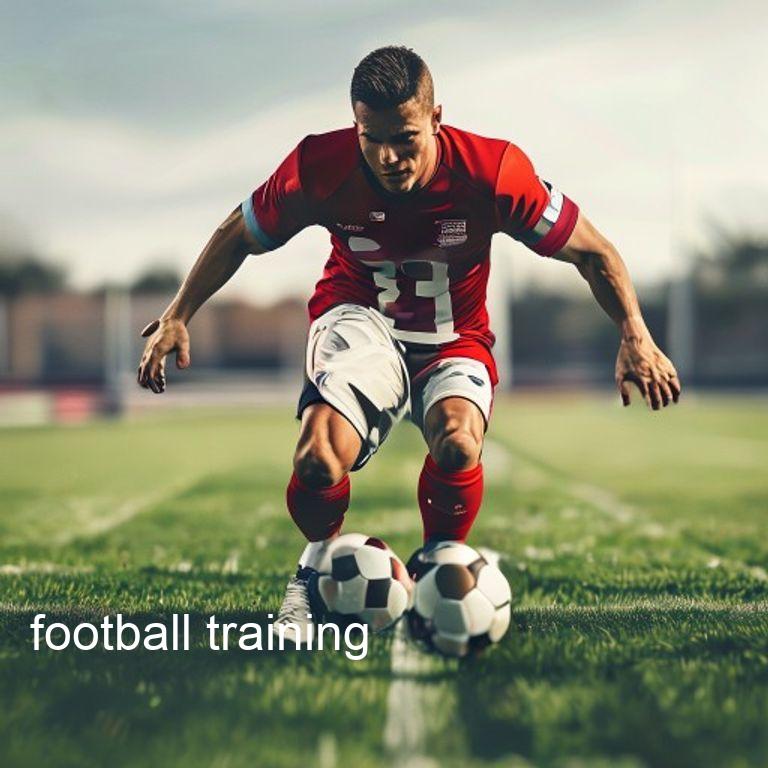
Table of Contents
Football Training: 17 Expert Drills to Boost Your Skills
Whether you are an aspiring professional or a weekend warrior looking to dominate your local league, the difference between a mediocre player and a standout performer lies in the quality of their football training. Most players think that simply playing matches is enough to improve, but elite performance requires intentional, structured, and high-intensity practice sessions.
In this comprehensive guide, we dive deep into 17 scientifically backed drills designed to enhance your technical proficiency, tactical awareness, and physical conditioning. From mastering the “perfect touch” to developing explosive speed, these exercises are curated to transform your game. To understand the broader context of professional methodology, you can explore the technical standards set by FIFA’s technical guidelines.
Why Structured Training is Non-Negotiable
Modern football has evolved. Gone are the days when training consisted solely of laps around the pitch and endless long-ball practice. Today, top-tier academies focus on “cognitive-motor loading”—training the brain to make decisions while the body is under physical stress. Effective soccer training must address four key pillars:
- Technical Mastery: Ball control, passing accuracy, and shooting precision.
- Tactical Intelligence: Positioning, reading the game, and spatial awareness.
- Physical Conditioning: Agility, explosive power, stamina, and core strength.
- Psychological Resilience: Focus, decision-making under pressure, and confidence.
If you want to track more sports-related insights and community discussions, check out our sports category for more updates.

17 Expert Drills to Elevate Your Performance
To maximize your results, we have categorized these drills into Technical, Agility/Speed, and Tactical segments. Follow these carefully to ensure progressive overload—the principle of gradually increasing the difficulty of your training to ensure continuous improvement.
Category 1: Technical Mastery Drills
1. The Wall Pass (First Touch & Passing)
One of the simplest yet most effective drills. Find a solid wall and practice passing the ball against it from varying distances.
The Goal: Focus on the weight of your pass and your “first touch” upon receiving the ball. Your first touch should set you up for the next move, not just stop the ball dead.
2. Cone Slalom (Dribbling Precision)
Set up 10 cones in a straight line, roughly 1 meter apart. Weave through them using different parts of your foot (inside, outside, sole, and laces).
Pro Tip: Keep your knees bent and your eyes up. Don’t just stare at the ball; scan the horizon to mimic match conditions.
3. The Figure-Eight (Close Control)
Place two cones approximately 3 meters apart. Dribble the ball in a figure-eight pattern around the cones. This forces you to use tight, micro-adjustments with your touch, which is essential for navigating crowded midfields.
4. Long-Range Accuracy (The Diagonal Switch)
Place several targets (buckets or small cones) at different distances. Practice hitting these targets with long, diagonal lofted passes. This mimics a winger or defender switching the play to find an open teammate.
5. One-Touch Volleys (Air Control)
Have a partner (or a wall) kick the ball toward you at chest or thigh height. Your objective is to control the ball and return it with a single touch using a volley or a lace strike. This develops incredible coordination and timing.
6. Weak Foot Isolation
Dedicated football training sessions must involve your non-dominant foot. Spend 15 minutes doing everything—passing, dribbling, and shooting—using *only* your weaker foot. This eliminates the “one-footed player” liability.
7. Scanning Drill (Spatial Awareness)
While dribbling through cones, have a friend hold up colored cards or numbers behind you. You must call out the color/number without stopping your movement. This trains your brain to “scan” before receiving the ball.
Category 2: Agility and Explosive Speed
8. Shuttle Runs (Change of Direction)
Set up four markers at 5-meter intervals. Sprint to the first, touch the ground, and sprint back. This mimics the high-intensity, short-burst nature of modern soccer training, where players constantly change direction to find space.
9. The T-Drill (Lateral Agility)
Set cones in a ‘T’ shape. Sprint to the center, shuffle laterally to the left, shuffle to the right, and sprint back. This develops the lateral quickness required by defenders to stay goal-side of an attacker.
10. Box Jump to Sprint (Explosive Power)
Perform 5 explosive box jumps, immediately transitioning into a 10-meter sprint. This trains your fast-twitch muscle fibers, essential for winning “first-to-the-ball” battles.
11. Reactive Agility (Mirror Drill)
Face a partner. Both of you move laterally within a small square. The partner moves randomly, and you must mirror their movements exactly. This develops lightning-fast reaction times.
Category 3: Tactical and Game-Specific Drills
12. The Shooting Gauntlet
Receive a ball, take one touch to set it, and the second to shoot. Vary the angles: from the edge of the box, from a tight angle, and from a long-distance distance. Precision beats power 80% of the time.
13. Small-Sided Games (SSG)
Play 3v3 or 4v4 in a very tight space. Small-sided games are the holy grail of tactical development, forcing more touches, more decisions, and higher intensity than an 11v11 match.
14. Shadow Defending (Body Positioning)
Practice the “jockeying” motion. Move laterally with your center of gravity low, hips bent, and weight on the balls of your feet. This ensures you aren’t easily bypassed by a quick attacker.
15. Crossing and Finishing
Practice delivering balls into the “corridor of uncertainty” (the space between the goalkeeper and the defenders). This is the most dangerous area in football for an attacker to occupy.
16. The Pressure Box (Decision Making)
In a small 5×5 meter box, play a 2v1. The player with the ball must find a way to pass or dribble past the defender under extreme time pressure. This develops composure under pressure.
17. Transition Drills
Practice moving from a defensive shape to an attacking shape instantly. Upon winning the ball in defense, immediately look for a “penetrative pass” to a target player. Speed of transition is what separates elite teams like Man City from mid-table clubs.

Comparative Analysis of Training Focus
Depending on your position, your training priority should shift. Use the table below to tailor your weekly schedule.
| Position | Primary Focus | Recommended Drills |
|---|---|---|
| Goalkeeper | Reflexes, Handling, Distribution | One-Touch Volleys, Long-Range Accuracy, Reactive Agility |
| Defender | Positioning, Aerial Ability, Tackling | Shadow Defending, Box Jumps, Shuttle Runs |
| Midfielder | Vision, Passing, Stamina | Scanning Drill, Wall Pass, Small-Sided Games |
| Forward | Finishing, Explosiveness, Dribbling | Shooting Gauntlet, Cone Slalom, T-Drill |
The Benefits of Consistent Football Training
Investing time in structured football training offers benefits that extend far beyond the pitch. Statistics from sports science studies suggest that athletes who follow a periodized training program see a 25-30% increase in aerobic capacity (VO2 max) within the first 12 weeks of consistent work.
- Injury Prevention: A strong core and well-conditioned muscles significantly reduce the risk of ACL and hamstring tears.
- Mental Clarity: The high-intensity cognitive demand of soccer helps improve focus and decision-making in high-stress environments.
- Skill Automation: Through repetition, technical skills become “muscle memory,” allowing you to play instinctively rather than thinking about your feet.
- Confidence: There is no substitute for the confidence that comes from knowing you have mastered a skill.
Common Mistakes to Avoid
Even the most dedicated players often hit plateaus.



Responses