
Basketball Training: 15 Powerful Drills for Faster Improvement

Table of Contents
Basketball Training: 15 Powerful Drills for Faster Improvement
Whether you are a weekend warrior looking to dominate your local rec league or an aspiring collegiate athlete aiming for the pros, one truth remains constant: your success is built in the hours when nobody is watching. High-level basketball training isn’t about just shooting hoops for an hour; it is about deliberate, intentional practice designed to sharpen specific skills under pressure.
In the modern era of basketball, the game has evolved. The “positionless” revolution means guards must rebound, and big men must handle the ball. To keep up, your training regimen must be holistic. To master the game, you need a blend of ball handling, footwork, finishing, and shooting precision. In this guide, we break down 15 elite basketball drills that will transform your game from mediocre to unstoppable.
The Science of Skill Acquisition: Why Proper Drills Matter
Why do some players improve rapidly while others plateau? The difference lies in the quality of their training. According to neurological studies on motor learning, “deliberate practice”—the act of pushing just beyond your current ability—is what builds myelin, the insulating layer around nerve fibers that increases the speed of electrical impulses. In simpler terms: the more you practice specific, high-intensity movements, the more “automatic” those movements become during a game.
When you engage in structured basketball training, you are not just building muscle memory; you are building cognitive efficiency. You want to reach a point where you don’t “think” about the crossover; you simply execute it. This guide is designed to take you from fundamental mechanics to advanced execution.
Categorizing the 15 Essential Basketball Drills
To maximize your time, it is best to categorize your training. You cannot jump into advanced triple-threat moves if your basic dribbling is shaky. We have organized these 15 drills into three critical phases: Ball Handling & Footwork, Shooting & Scoring, and Conditioning & Agility.
Phase 1: Elite Ball Handling and Footwork
Control is the foundation of everything. If you cannot control the ball, you cannot control the game.
1. The Stationary Pound Dribble
Start with a basic pound dribble. Dribble the ball as hard as you can at ankle height, then knee height, then shoulder height. This builds forearm strength and improves the “feel” of the ball against your palm.
- Duration: 30 seconds per hand.
- Focus: Keeping your eyes up, never looking at the ball.
2. Figure-Eight Dribbling
Place two cones (or water bottles) about two feet apart. Dribble the ball in a figure-eight pattern around the cones. This forces you to switch hands quickly and improves your ability to manipulate the ball in tight spaces.
3. Cone Weave (Slalom Dribbling)
Set up 5-10 cones in a straight line. Weave through them using different moves: crossover, between the legs, and behind the back. This is essential for learning how to maintain a low center of gravity while moving at speed.
4. The Mikan Drill
A classic for a reason. Stand under the hoop and use a continuous rhythm to make layups on alternating sides of the rim. This improves touch around the basket and footwork under the rim.
5. Defensive Sliding Drills
Basketball is as much about stopping your opponent as it is about scoring. Set two markers 15 feet apart. Slide laterally between them in a low defensive stance. Do not let your feet touch or cross; keep them wide and powerful.
Phase 2: Precision Shooting and Scoring
If you can’t score, you can’t win. Modern basketball drills prioritize efficiency and range.
6. Catch-and-Shoot Spot Training
Have a partner pass you the ball at five different spots: the corners, the wings, and the top of the key. You must catch the ball with perfect mechanics and release immediately. This builds the “quick release” necessary for elite shooting.
7. Off-the-Dribble Pull-ups
Dribble hard towards the paint, then suddenly stop (a “stop-and-pop”) to take a mid-range jumper. This mimics the rhythm of real-game scoring and builds core stability.
8. Free Throw Pressure Drills
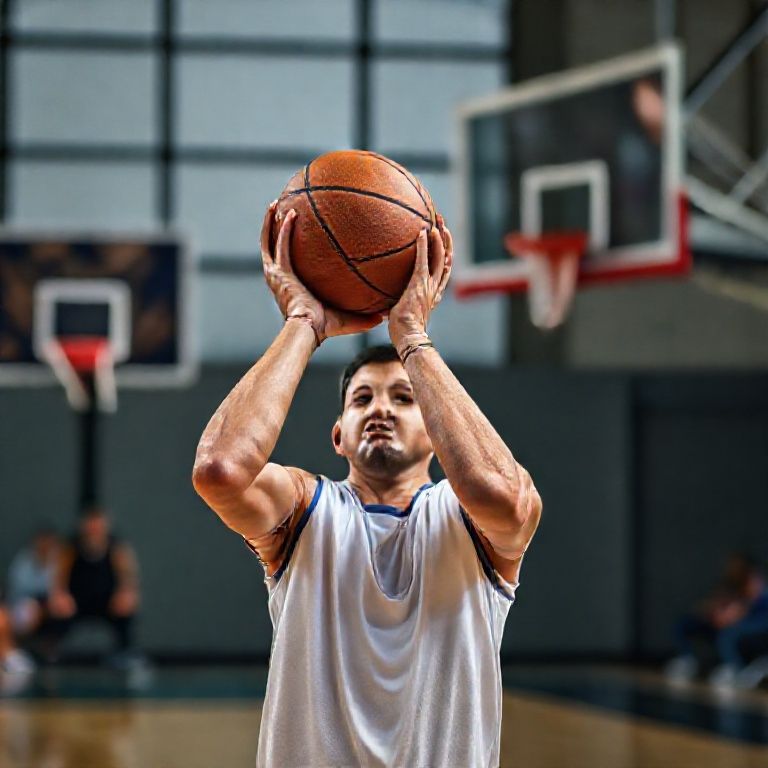
Never practice free throws when you are relaxed. Practice them when you are tired. Shoot 10 free throws. If you miss more than two, you do 20 pushups. This simulates the fatigue and pressure of a real game.
9. Corner Three-Point Cascades
Focus on your footwork from the corner. Step into the shot and focus on the “upward” motion of your energy from your legs through your fingertips. Consistency from the corners is the most valuable asset in modern basketball.
10. Floaters and Runners
As defenses tighten, you need a way to score over taller players. Practice driving toward the rim and launching a high-arcing floater before the defender can block you. Use both hands to become unpredictable.
Phase 3: High-Intensity Agility and Finishing
This is where physical conditioning meets skill execution.
11. Suicide Sprints (Full Court)
A staple for any sports training program. Sprint to the free-throw line and back, mid-court and back, far free-throw line and back, and full court and back. This builds anaerobic endurance.
12. Closeout Drills
Sprint from the paint toward a perimeter position, then “break down” your steps (short, choppy steps) as you reach the player. This teaches you how to defend without fouling.
13. Wall Glides (Strength/Stability)
While not a ball-handling drill, wall sits and lunges are vital for the lower body strength needed for explosive first steps and vertical jumps.
14. Rebounding Box-Out Drills
Have a partner throw the ball off the rim. You must use your body to “box out” the opponent before jumping to secure the ball. This builds the physical toughness required for the “dirty work.”
15. Transition Fast-Break Drills
Practice sprinting from one end of the court to the other while dribbling at top speed. This builds the ability to lead the fast break and find open teammates in transition.
Summary of Training Focus Areas
| Skill Category | Primary Benefit | Difficulty Level |
|---|---|---|
| Ball Handling | Control & Pressure Resistance | Beginner – Advanced |
| Shooting | Accuracy & Scoring Efficiency | Intermediate – Advanced |
| Agility | Defensive Speed & Burst | Intermediate |
| Conditioning | Endurance & Stamina | Advanced |
Benefits of Structured Basketball Training
Engaging in a systematic approach to your basketball training offers more than just better stats. Here is what you can expect:
- Increased Confidence: When you know you can handle the ball under pressure, you play with more freedom.
- Injury Prevention: Proper mechanics and strength training (like lunges and stability drills) prepare your joints and muscles for the violent movements of basketball.
- Enhanced Decision Making: As your skills become automatic, your brain is freed up to read the defense and make smarter plays.
- Improved Stamina: High-intensity drills ensure you are just as effective in the 4th quarter as you were in the 1st.
Common Mistakes to Avoid
Even with the best intentions, many players fall into traps that hinder their progress. Watch out for these:
- Practicing at Low Intensity: If you are practicing dribbling while walking, you aren’t training for a game. You must perform drills at game speed.
- Ignoring the Weak Hand: This is the most common error. If you only work on your dominant hand, you become a predictable player. Every drill must be done with both hands.
- Neglecting Footwork: Many players focus only on the hands. However, basketball is played with the feet. Without proper footwork, your shooting and dribbling will always be slightly off.
- Lack of Consistency: Training for five hours once a week is far less effective than training for 45 minutes every single day.
Expert Tips for Maximum Improvement
As someone who has studied various athletic methodologies, I recommend these “pro” strategies:
1. Video Yourself: Use your smartphone to record your shooting form or your defensive stance. You will see flaws (like a dropped elbow or a lack of balance) that you cannot “feel” while performing the move.
2. The “Game-Scenario” Mindset: Never do a drill in a vacuum. Even if you are just practicing a crossover, pretend a defender is trying to strip the ball. This mental conditioning is what separates the greats from the rest.
3. Focus on Quality over Quantity: Doing 50 perfect layups is infinitely more valuable than doing 200 lazy ones. If your form breaks down due to exhaustion, take a 30-second rest and restart. You want to train your brain to recognize correct mechanics.
Challenges You Might Face
Improving is rarely a straight line. You will encounter several hurdles:
- The Plateau: You might feel like you aren’t getting better for weeks. This is usually when your body is making neurological adaptations. Stick with it.
- Overtraining: Too much volume without enough recovery can lead to shin splints, tendonitis, or burnout
Responses