
The Birth Of Musical Notation: Confidence Killers that Confuse Beginners

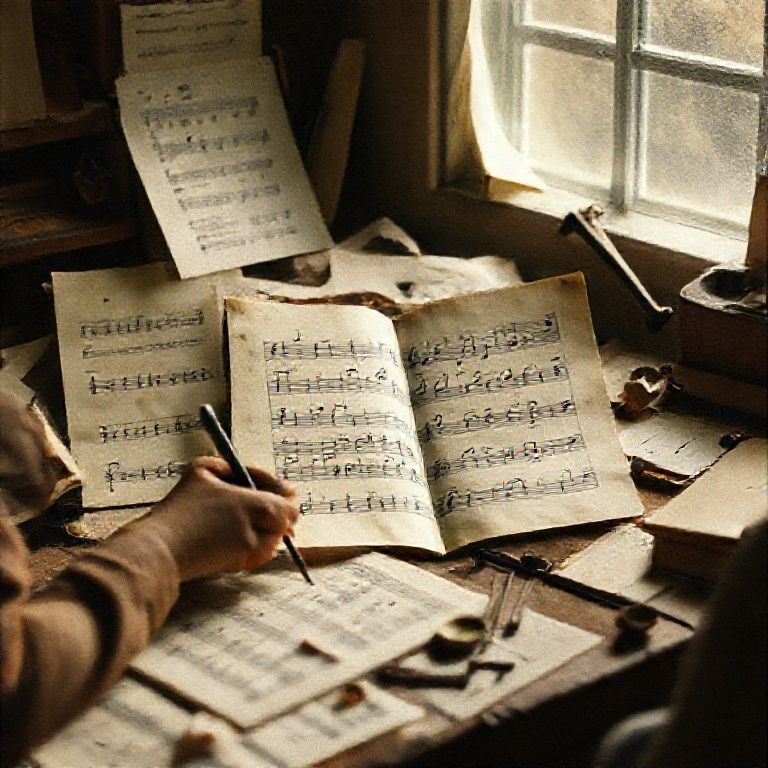
the birth of musical notation

Introduction
The evolution of music has been a timeless and universal language, capable of evoking emotions, conveying thoughts, and connecting people across cultures and centuries. However, before this language could be effectively communicated, music had to be transcribed into a tangible form that could be understood by others. The birth of musical notation marked a pivotal moment in the history of music, as it provided a standardized system for recording and reproducing melodies, harmonies, and rhythms.
Before the advent of written notation, music was passed down orally, relying on memory and personal experience to convey complex musical ideas. While this method worked for small communities and simple compositions, it became increasingly challenging as music became more sophisticated and widespread. The need for a standardized system that could be shared among musicians, composers, and audiences led to the development of various early notational systems, each with its own unique characteristics and limitations.
The earliest known forms of musical notation date back to ancient civilizations in Egypt, Greece, and China, where scribes used symbols and hieroglyphs to represent sounds and rhythms. These early systems were often cryptic and open to interpretation, but they laid the groundwork for more advanced notational systems that would emerge later, such as staff notation and clefs. In this article, we will explore the birth of musical notation, tracing its development from ancient civilizations to the modern systems used today, and examining the key figures and innovations that shaped this fundamental aspect of music-making.

The Dawn of Musical Notation
Pre-History of Musical Notation
The birth of musical notation is a fascinating story that spans thousands of years. To understand the evolution of music writing systems, it’s essential to explore the pre-historic and ancient civilizations that laid the groundwork for modern notation.
Early Writing Systems
In ancient cultures, music was often passed down through oral tradition, with melodies and harmonies transmitted from generation to generation. However, as societies grew and became more complex, the need for a written system arose. The earliest writing systems, such as hieroglyphics and cuneiform, were used to record mathematical and literary works, but they didn’t initially focus on music.
Ancient Greek Music Notation
The ancient Greeks are credited with developing one of the first musical notation systems. In around 400 BCE, the Greek philosopher Aristotle wrote about a system of musical notation that used symbols to represent pitches and rhythms. This early notation system was primarily used for theoretical purposes, such as understanding the mathematical relationships between notes.
The Birth of Modern Notation
The modern system of musical notation began to take shape in the Middle Ages. The development of the staff, with its five lines and four spaces, allowed for a more efficient representation of pitches and harmonies. This innovation revolutionized music writing and paved the way for the creation of more complex and expressive musical compositions.
The Influence of Medieval Notation
Medieval scribes played a crucial role in refining the modern notation system. They developed new symbols and abbreviations to represent various musical concepts, such as rests, accidentals, and chord progressions. This work laid the foundation for the development of polyphonic music, which would become a hallmark of Western classical music.
The Emergence of Modern Notation
The 15th century saw the introduction of the modern staff, with its standardized layout and notation system. This innovation enabled composers to write more complex and nuanced music, with greater precision and expressiveness. As a result, musical compositions became increasingly sophisticated, leading to the development of new genres and styles.
The Impact of Musical Notation
The birth of musical notation had a profound impact on music-making, enabling composers to create and communicate their ideas in a more efficient and expressive way. This innovation paved the way for the creation of complex and beautiful music that continues to inspire and influence musicians today.
Conclusion
In conclusion, the birth of musical notation was a gradual process that spanned thousands of years. From ancient Greek philosophers to medieval scribes, each generation contributed to the development of this fundamental aspect of music-making. Understanding the evolution of notation can provide valuable insights into the history and development of Western classical music.
References:
[1] “The Oxford Handbook of Music Notation” (Oxford University Press)
[2] “A History of Musical Notation” by Donald Grout (Yale University Press)

Conclusion
In conclusion, the development of musical notation marked a pivotal moment in the history of music, allowing for greater precision and communication among musicians across different cultures and time periods. As we continue to explore and appreciate the evolution of music, it is essential that we also recognize the significance of this innovation.
We invite you to take action by sharing your own knowledge and insights about the birth of musical notation with others, whether through casual conversations or more formal presentations. By doing so, we can work together to ensure that future generations continue to appreciate the rich history and cultural significance of music.
Here are five concise FAQ pairs on the birth of musical notation:
Q: Who is credited with inventing the earliest forms of musical notation?
A: The ancient Sumerians, Egyptians, and Greeks all contributed to the development of early musical notation systems.
Q: What was the primary medium used for early musical notation?
A: Bone, stone, and papyrus were commonly used materials for creating early musical notations.
Q: Who is considered one of the earliest known composers to use a formal system of musical notation?
A: The ancient Greek composer Aristoxenus (c. 350-330 BCE) is credited with developing the first comprehensive treatise on music theory.
Q: In what century did the modern staff system of musical notation emerge?
A: The modern staff system developed in the 15th century, primarily through the work of Italian musicians and scribes.
Q: Who wrote one of the most influential treatises on music theory that shaped modern musical notation?
Here’s a short quiz on “The Birth of Musical Notation”:
Question 1: Who is credited with developing the earliest known system of musical notation?
A) Pythagoras
B) Aristoxenus
C) Guido d’Arezzo
Show answer
Answer: C) Guido d’Arezzo
Question 2: What was the name of the system developed by Guido d’Arezzo, which used letters to represent pitches?
A) Solfege
B) Neumes
C) Modulation
Show answer
Answer: A) Solfege
Question 3: Which ancient Greek philosopher is believed to have been one of the first to write down musical compositions and notations?
A) Plato
B) Aristotle
C) Pythagoras
Show answer
Answer: B) Aristotle
Question 4: What was the name of the treatise written by Aristoxenus, which described a system of notation that used symbols to indicate pitch and duration?
A) “Elementa Harmonica”
B) “De Musica”
C) “Prolegomena”
Show answer
Answer: A) “Elementa Harmonica”




The way you explain things is so easy to follow. 💯
Great article! Amazing insights!
Very informative and well-written article. 😊