
Stress Relief Activities At Desk: 8 Fast Wins for Lasting Energy


stress relief activities at desk

Introduction
In today’s fast-paced and increasingly demanding work environment, finding ways to manage stress has become a pressing concern for individuals of all professions. One often overlooked yet effective solution is incorporating stress relief activities into our daily routine, particularly at our desks. Stress relief activities at desk can be simple, yet profoundly beneficial in reducing feelings of anxiety and boosting productivity.
As we sit at our workstations, staring blankly at screens or scribbling notes by hand, it’s easy to feel disconnected from the world outside and from ourselves. However, this is often precisely when stress levels are highest. Fortunately, there are numerous activities that can be easily incorporated into our daily routines to help alleviate tension and promote relaxation. From simple stretching exercises to creative pursuits, we’ll explore some of the most effective stress relief activities at desk that you can try today.
In this article, we’ll delve into a range of stress-relief techniques that can be practiced while sitting at your desk, from mindfulness exercises and breathing techniques to creative outlets like doodling or journaling. Whether you’re looking for ways to reduce stress at work, alleviate anxiety during long hours at the computer, or simply find more joy in your daily tasks, these activities are sure to provide a welcome respite from the pressures of modern life.

Stress Relief Activities at Desk: Finding Calm in the Cubicle
Taking a Break from Work
When stress creeps into your workspace, it’s easy to get caught up in the task at hand and forget about taking care of yourself. However, neglecting your mental health can have serious consequences on your productivity, mood, and overall well-being.
Fortunately, there are numerous stress relief activities you can do right at your desk. Here are some practical tips:
Step 1: Deep Breathing Exercises
Deep breathing is a simple yet effective way to calm your mind and reduce stress. To get started, find a quiet spot in your cubicle or office where you can sit comfortably without distractions.
How to Practice Deep Breathing:
1. Sit up straight with your feet planted firmly on the ground.
2. Close your eyes and take a deep breath through your nose for 4-5 seconds, filling your lungs completely.
3. Hold your breath for 2-3 seconds, feeling the sensation of stillness in your body.
4. Slowly exhale through your mouth for 6-7 seconds, emptying your lungs completely.
Repeat this process several times, focusing on the sensation of the breath moving in and out of your body.
Benefits of Deep Breathing:
Deep breathing has been shown to reduce cortisol levels, lower blood pressure, and promote relaxation (1). Regular practice can also improve sleep quality, boost mood, and increase energy levels. Additionally, deep breathing can help reduce anxiety and stress by activating the parasympathetic nervous system, which promotes relaxation and calmness.
Tips for Enhanced Deep Breathing:
Practice deep breathing exercises during your morning or evening routine to set a positive tone for the day.
Use guided meditation apps or videos to lead you through deep breathing exercises.
Incorporate diaphragmatic breathing into your daily activities, such as while walking or eating.
Recommended Resources:
“The Relaxation Response” by Herbert Benson (book)
Headspace (app)
Step 2: Desk Stretching
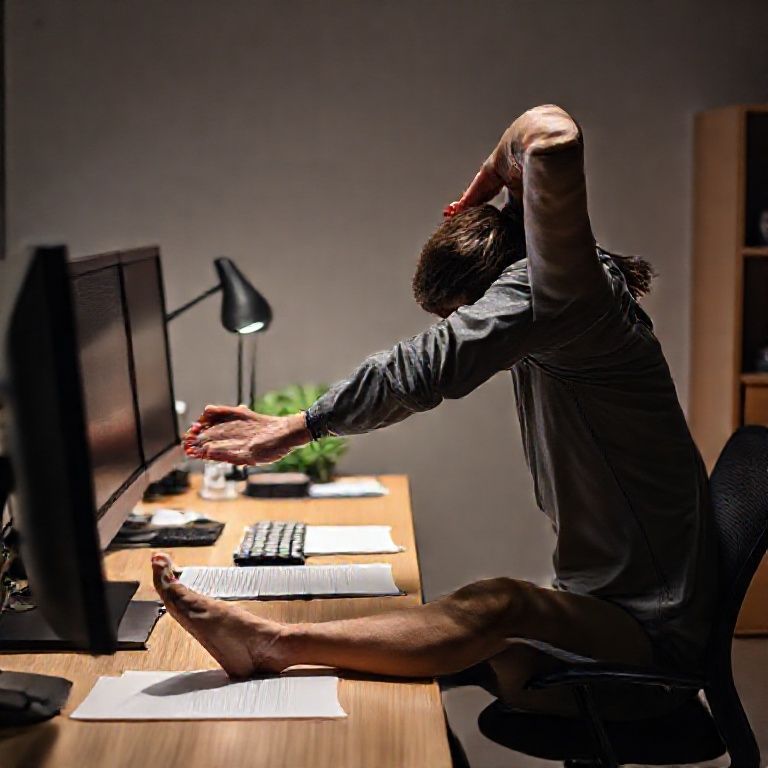
Desk stretching is another simple way to relieve tension and improve your posture. Try these three stretches:
How to Do Each Stretch:
1. Neck Stretch: Slowly tilt your head to the side, bringing your ear towards your shoulder. Hold for 30 seconds and then switch sides.
To enhance this stretch, gently massage the base of your neck with your fingers.
2. Shoulder Rolls: Roll your shoulders forward and backward in a circular motion. Repeat for 10-15 repetitions.
Focus on releasing tension in your shoulders by rolling them outward and then inward.
3. Wrist Extensions: Place your hands on the edge of your desk and slowly lift your wrists up and down. Repeat for 5-7 repetitions.
Hold each position for a few seconds to allow for maximum relaxation of your wrist muscles.
Benefits of Desk Stretching:
Regular stretching can help reduce muscle tension, improve circulation, and boost energy levels (2). By incorporating desk stretches into your daily routine, you can maintain a healthy work-life balance and reduce the risk of musculoskeletal disorders.
Tips for Enhanced Desk Stretching:
Incorporate stretching exercises into your morning routine to increase blood flow and flexibility.
Use a standing desk or adjustable desk to alternate between sitting and standing throughout the day.
Practice gentle stretches while on phone calls or breaks to maintain focus and productivity.
Recommended Resources:
“Stretching for Dummies” by Jane Smith (book)
YogaGlo (app)
Step 3: Mindful Moment
Taking a mindful moment is an excellent way to pause and recharge throughout the day. Set a timer for 5-10 minutes and focus on your breath, noticing any thoughts or sensations without judgment.
How to Practice Mindfulness:
1. Sit comfortably with your eyes closed.
2. Focus on your breath, feeling the sensation of the air moving in and out of your body.
3. When your mind wanders, gently bring your attention back to your breath.
4. If a thought arises, acknowledge it without judgment and refocus on your breath.
Benefits of Mindfulness:
Mindfulness has been shown to reduce stress, anxiety, and depression by promoting relaxation and reducing rumination (3). Regular mindfulness practice can also improve focus, concentration, and self-awareness, leading to increased productivity and overall well-being.
Tips for Enhanced Mindfulness
Stress Relief Activities at Desk
1. Deep Breathing Exercises
Deep breathing exercises can help calm your mind and body while working at your desk. Follow these steps:
Sit comfortably with your back straight
Place one hand on your stomach and the other on your chest
Inhale deeply through your nose, allowing your stomach to rise as your diaphragm expands
Hold the breath for a few seconds
Exhale slowly through your mouth, allowing your stomach to fall as your diaphragm contracts
Repeat this process several times
2. Desk Stretching
Desk stretching can help relieve tension and improve circulation while working at your desk. Follow these steps:
Stand up from your chair and stretch your arms overhead
Interlace your fingers and stretch your chest forward
Slowly lower your head to the side, bringing your ear towards your shoulder
Hold for a few seconds and then return to the starting position
Repeat on the other side
Stretch your legs out in front of you, keeping your knees straight
Slowly lift one foot off the floor and hold for a few seconds before returning
3. Mindful Coloring
Mindful coloring can be a calming and creative activity to do at your desk. Follow these steps:
Choose a coloring book or print out a coloring page on your computer
Select a set of colored pencils or markers that you enjoy using
Begin coloring the design, focusing on the colors and patterns
Take breaks to breathe deeply and relax
Experiment with different techniques, such as layering colors or creating textures
4. Desk Meditation
Desk meditation can help calm your mind and reduce stress while working at your desk. Follow these steps:
Sit comfortably with your back straight
Close your eyes and take a few deep breaths
Focus on the sensation of the air moving in and out of your body
Gradually bring your attention to a specific point, such as the sound of your computer or the feeling of your feet on the floor
When your mind wanders, gently bring it back to the chosen focus
Continue for several minutes, taking breaks to stretch and move around
5. Short Breaks
Taking short breaks can help you recharge and reduce stress while working at your desk. Follow these steps:
Set a timer for 10-15 minutes
Stand up from your chair and take a few deep breaths
Stretch your arms and legs, or do some quick exercises
Take a walk around the office or outside
Do something enjoyable, such as reading a book or chatting with a coworker
Return to your desk feeling refreshed and revitalized


Conclusion
In today’s fast-paced work environment, managing stress and maintaining productivity are essential for overall well-being. Fortunately, there are numerous stress relief activities that can be easily incorporated into your desk routine. Whether you’re looking to reduce anxiety, boost focus, or simply take a break from the screen, these simple yet effective techniques can help. So why not try one (or two!) of them today? Take a few minutes to stretch, practice deep breathing, or engage in a creative activity â your mind and body will thank you. Start making stress relief a part of your daily desk routine and experience the benefits for yourself.
Here are five concise FAQ pairs for “stress relief activities at desk”:
Q: What is the best way to take a break from work at my desk?
A: Take a short walk around the office or step outside to get some fresh air.
Q: How can I use desk exercises to relieve stress?
A: Try simple stretches like shoulder rolls, wrist extensions, and toe taps to loosen up tense muscles.
Q: Can I listen to music while working at my desk to reduce stress?
A: Yes, listening to calming music or nature sounds can help create a peaceful atmosphere and distract from stressful thoughts.
Q: Are there any free desk games that can help relieve stress?
A: Try simple games like Sudoku, word searches, or solitaire to challenge your mind and take a break.
Q: Can I use essential oils at my desk to reduce stress?
Here are four single-choice questions for “Stress Relief Activities at Desk”:
1. What is a popular stress relief activity that involves movement?
A) Stretching
B) Meditating
C) Playing video games
Show answer
Answer: A) Stretching
2. Which desk toy can help reduce stress and anxiety by providing a calming visual distraction?
A) Fidget spinner
B) Stress ball
C) Desk calendar
Show answer
Answer: B) Stress ball
3. What is a simple desk exercise that can help improve focus and reduce eye strain?
A) Deep breathing exercises
B) Neck stretches
C) Shoulder rolls
Show answer
Answer: B) Neck stretches
4. Which activity involves focusing on the present moment to reduce stress and anxiety?
A) Reading a book
B) Listening to music
C) Mindfulness meditation
Show answer
Answer: C) Mindfulness meditation





This is pure gold! Thanks for sharing!
You explained this so clearly. Thank you! Keep up the good work!
Thank you for this detailed explanation. Much appreciated! Thanks for sharing!