
Hip Mobility Routine For Athletes: 8 Costly Errors that Waste Your Time


hip mobility routine for athletes

Introduction
As an athlete, you’re no stranger to the importance of flexibility and range of motion. You know that being able to move freely and efficiently on the field or court is crucial to performing at your best and avoiding injuries. But while stretching and foam rolling are essential components of any athlete’s routine, they often don’t address the underlying mobility issues that can hold you back.
A well-designed hip mobility routine for athletes is critical to unlocking optimal performance and reducing the risk of injury. The hips are a complex joint system that plays a vital role in power generation, speed, and agility – yet they’re often neglected in favor of more isolated exercises. By incorporating specific drills and exercises into your training regimen, you can improve your hip mobility, increase your range of motion, and enhance your overall athletic performance.
In this article, we’ll explore the key components of a hip mobility routine for athletes, including exercises, stretches, and techniques to help you unlock optimal mobility and take your game to the next level. Whether you’re a professional athlete or a serious recreational player, a well-designed hip mobility routine can be the difference between success and injury – and it all starts with understanding how to mobilize your hips effectively.
Improving Hip Mobility for Athletes
The hip joint is a complex and highly mobile joint that plays a crucial role in many sports and athletic activities. Good hip mobility is essential for optimal performance, reduced injury risk, and improved overall athleticism.
The Importance of Hip Mobility
Hip mobility refers to the range of motion and flexibility within the hip joint. It involves the movement of the femur (thigh bone) around the acetabulum (hip socket), as well as the movement of the pelvis and lower back. Good hip mobility is essential for athletes who engage in activities that involve running, jumping, pivoting, or quick changes of direction.
Benefits of Hip Mobility Routine
A well-designed hip mobility routine can have numerous benefits for athletes, including:
Reduced Injury Risk
Hip mobility exercises can help reduce the risk of injury by improving flexibility and reducing muscle imbalances. For example, tight hip flexors can lead to overuse injuries such as IT band syndrome (1).
Improved Performance
Good hip mobility can improve an athlete’s overall performance by allowing for more efficient movement patterns, increased speed, and better power output.
Enhanced Recovery
Hip mobility exercises can also help with recovery after exercise or competition. By improving flexibility and reducing muscle tension, athletes can reduce the risk of delayed onset muscle soreness (DOMS) and other recovery-related issues.
Step-by-Step Hip Mobility Routine
Here Is a Step-by-Step Guide to Creating a Hip Mobility Routine:
Warm-Up (5-10 Minutes)
Begin with a dynamic warm-up that includes light cardio and mobility exercises such as leg swings, hip circles, and lunges.
Hip Flexor Stretch
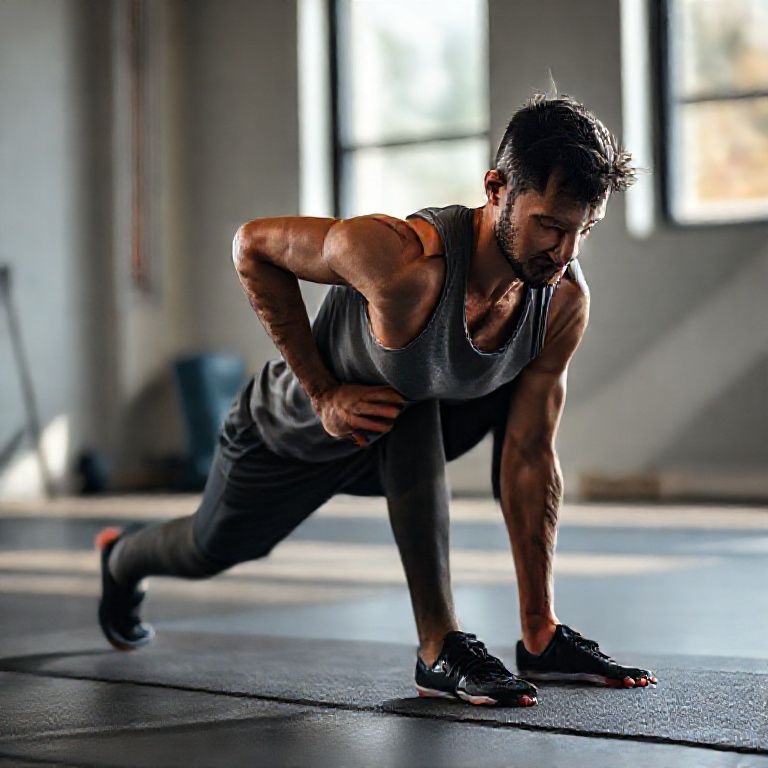
Stand with your feet shoulder-width apart and take a large step forward with one foot. Lower your body down into a lunge position, keeping your back knee almost touching the ground. Lean forward slightly to stretch the front of your hip. Hold for 30 seconds and repeat on the other side.
Piriformis Stretch
Sit on the floor with your affected leg crossed over your other leg. Place your hand on the knee of the crossed leg and pull it toward your opposite shoulder. You should feel a stretch in the back of your leg. Hold for 30 seconds and repeat on the other side.
Glute Bridge
Lie on your back with your knees bent and feet flat on the ground. Slowly lift your hips up towards the ceiling, squeezing your glutes at the top of the movement. Hold for a count of 2 and repeat for 3 sets of 12 reps.
Foam Rolling or Self-Myofascial Release
Use a foam roller or your own body weight to release tension in your hip flexors, glutes, and piriformis muscles. Spend 30 seconds to 1 minute on each area, rolling back and forth to release tension.
Conclusion
Incorporating a hip mobility routine into your training program can have numerous benefits for athletes. By improving flexibility, reducing injury risk, and enhancing recovery, you can take your performance to the next level. Remember to always consult with a healthcare professional or certified trainer before starting any new exercise program.
References:
1. National Athletic Trainers’ AssociationNata. (2020). Hip Flexor Strain.
2. American Council on ExerciseAcefitness. (2018). Foam Rolling for Athletes.


Conclusion
In conclusion, incorporating hip mobility into an athlete’s training regimen can significantly enhance performance and reduce the risk of injury. A well-designed hip mobility routine can improve range of motion, increase power output, and enhance overall athletic function.
We encourage all athletes to prioritize their hip health by committing to a regular hip mobility routine. This may include exercises such as leg swings, lunges, and hip circles, as well as foam rolling and self-myofascial release techniques. By making hip mobility a priority, athletes can take a proactive approach to optimizing their performance and achieving their full potential.
Here are five concise FAQ pairs for a hip mobility routine for athletes:
Q: What is the primary goal of incorporating hip mobility into my training routine?
A: The primary goal is to improve range of motion, reduce injury risk, and enhance athletic performance by increasing power, speed, and agility.
Q: How often should I perform hip mobility exercises as part of my training routine?
A: Aim to incorporate hip mobility exercises 2-3 times per week, focusing on specific days or sessions that require high-intensity movements such as sprinting or jumping.
Q: Can I do hip mobility exercises without any prior experience or knowledge?
A: Yes, but it’s recommended to work with a qualified coach or trainer who can guide you through proper technique and progression. You can also find many online resources and tutorials to help you get started.
Q: Are there specific hip mobility exercises that are most beneficial for athletes in different sports?
A: For example, soccer players may benefit from exercises targeting the gluteus medius, while basketball players may focus on exercises strengthening the hip abductor muscles. Consult with a coach or trainer to determine the best exercises for your specific sport.
Q: Can hip mobility exercises be done at home or do I need specialized equipment?
Here’s a short quiz on hip mobility routine for athletes:
Question 1: What is the primary function of the gluteus medius muscle in hip mobility?
A) To abduct the hip joint
B) To flex the hip joint
C) To extend the hip joint
Show answer
Answer: A) To abduct the hip joint
Question 2: Which of the following exercises is often used to improve hip internal rotation range of motion?
A) Lateral leg lift
B) Figure-four stretch
C) Hip abduction with a band
Show answer
Answer: B) Figure-four stretch
Question 3: What is the recommended frequency for performing hip mobility exercises as part of an athlete’s training routine?
A) Daily, for 10-15 minutes
B) 2-3 times per week, for 5-10 minutes
C) Weekly, for 30 minutes
Show answer
Answer: B) 2-3 times per week, for 5-10 minutes
Question 4: Which of the following is a common cause of hip mobility limitations in athletes?
A) Tight quadriceps muscles
B) Weak gluteus maximus muscle
C) Restricted range of motion due to scar tissue or adhesions
Show answer
Answer: C) Restricted range of motion due to scar tissue or adhesions




Excellent work as always! This was really helpful.
Your insights are always spot-on. 👍
Interesting perspective. This post is a goldmine of useful information.