
Balance Training Drills For Beginners: 8 Costly Errors that Waste Your Time

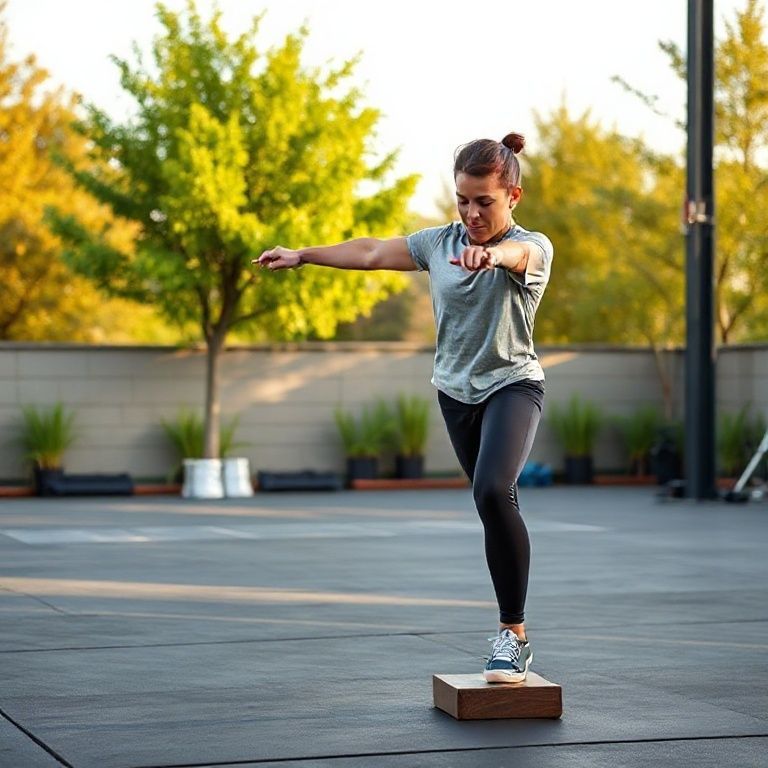
balance training drills for beginners

Introduction
If you’re new to fitness or looking to improve your overall physical well-being, one of the most effective ways to achieve this is through balance training. Balance training drills for beginners can be an intimidating concept, especially if you’re not familiar with the idea of challenging your body’s equilibrium. However, with a little practice and patience, anyone can learn to improve their balance and reduce their risk of injury.
As we age or take up new physical activities, our bodies naturally lose some of its flexibility and coordination. This is where balance training comes in – it helps to strengthen the muscles that support our joints and improve our overall proprioception (our sense of body awareness). By incorporating balance training into your fitness routine, you can not only enhance your athletic performance but also reduce your risk of falls and injuries.
In this article, we’ll take a closer look at some beginner-friendly balance training drills that can help you get started on your journey to improved balance and overall physical fitness. We’ll cover the basics of each drill, provide step-by-step instructions, and offer tips for modifying them to suit different fitness levels. Whether you’re looking to improve your functional strength, increase your flexibility, or simply feel more confident in your daily activities, these balance training drills are sure to help you achieve your goals.

Balance Training Drills for Beginners
Understanding the Importance of Balance Training
Balance training is an essential component of any fitness routine, and it’s especially crucial for beginners who may not have a strong foundation in physical activity. Good balance can help prevent injuries, improve overall athletic performance, and even enhance daily functioning. However, many people underestimate the importance of balance or are unsure where to start with incorporating balance training into their workout routine.
Fortunately, balance training drills for beginners are easy to learn and can be adapted to suit any fitness level. In this article, we’ll explore some practical and effective balance training drills that you can try at home or in a gym setting.
Step 1: Single-Leg Stance
The single-leg stance is a fundamental balance training exercise that targets the core muscles, including the quadriceps, hamstrings, glutes, and lower back. To perform this drill:
1. Stand on one leg, keeping the other foot lifted off the ground.
2. Engage your core muscles by drawing your belly button towards your spine.
3. Keep your knee straight and your weight evenly distributed on both legs (if possible).
4. Hold for 10-30 seconds, rest for 30 seconds, and repeat with the other leg.
Step 2: Heel-to-Toe Walking
Heel-to-toe walking is a balance training exercise that targets the ankles, feet, and core muscles. To perform this drill:
1. Stand on a flat surface with your feet shoulder-width apart.
2. Walk forward, placing the heel of one foot directly in front of the toes of the other foot.
3. Keep your knees slightly bent and your weight evenly distributed between both legs.
4. Hold for 30 seconds to 1 minute, rest for 30 seconds, and repeat.
Step 3: BOSU Ball Training
The BOSU ball is a versatile balance training tool that can be used for a variety of exercises. To perform BOSU ball training:
1. Stand on the BOSU ball with your feet shoulder-width apart.
2. Engage your core muscles by drawing your belly button towards your spine.
3. Keep your knees slightly bent and your weight evenly distributed between both legs.
4. Perform balance movements such as squats, lunges, or calf raises.
For more advanced users, try single-leg BOSU ball training:
1. Stand on one leg on the BOSU ball.
2. Engage your core muscles by drawing your belly button towards your spine.
3. Keep your knee straight and your weight evenly distributed on both legs (if possible).
4. Hold for 10-30 seconds, rest for 30 seconds, and repeat with the other leg.
Step 4: Balance Board Training
Balance boards are a great alternative to BOSU balls and offer similar benefits. To perform balance board training:
1. Stand on the balance board with your feet shoulder-width apart.
2. Engage your core muscles by drawing your belly button towards your spine.
3. Keep your knees slightly bent and your weight evenly distributed between both legs.
4. Perform balance movements such as squats, lunges, or calf raises.
For more advanced users, try single-leg balance board training:
1. Stand on one leg on the balance board.
2. Engage your core muscles by drawing your belly button towards your spine.
3. Keep your knee straight and your weight evenly distributed on both legs (if possible).
4. Hold for 10-30 seconds, rest for 30 seconds, and repeat with the other leg.
Step 5: Plyometric Training
Plyometric training is a high-intensity balance training exercise that targets the lower body. To perform plyometric training:
1. Stand on a flat surface with your feet shoulder-width apart.
2. Jump forward, landing softly on both feet.
3. Immediately jump up and switch legs.
4. Repeat for 30 seconds to 1 minute, rest for 30 seconds.
Step 6: Core Engagement
Core engagement is essential for maintaining balance and stability during balance training exercises. To engage your core:
1. Draw your belly button towards your spine.
2. Activate your transverse abdominis muscle (the deepest abdominal muscle).
3. Keep your pelvis in a neutral position.
For more references on balance training, see:
“The Science of Balance” by the American Council on Exercise (


Conclusion
In conclusion, balance training drills are an excellent way to improve overall fitness and reduce the risk of injury. For beginners, it’s essential to start with simple exercises that challenge your balance without overwhelming you. By incorporating these beginner-friendly balance training drills into your routine, you can build strength, confidence, and a strong foundation for more advanced exercises. Take the first step towards improving your balance today by finding a quiet and stable surface to practice, such as a yoga mat or a soft floor. Start with simple exercises like single-leg stands, heel-to-toe walks, or balance boards, and gradually progress to more challenging drills as you build your strength and confidence. Remember to listen to your body and only go as far as feels comfortable – with patience and persistence, you’ll be standing on one leg in no time!
Here are five concise FAQ pairs for “Balance Training Drills for Beginners”:
Q: What is balance training, and why is it important?
A: Balance training involves exercises that challenge your body’s ability to maintain equilibrium and stability, which is essential for overall physical fitness and injury prevention.
Q: Do I need any special equipment or space to start with balance training drills?
A: No, you don’t need any specialized equipment or a large space to begin with balance training. You can start with simple exercises like single-leg squats or heel-to-toe walking in your living room or backyard.
Q: Are there any safety precautions I should take when doing balance training drills?
A: Yes, it’s essential to warm up before starting any balance exercise and to listen to your body. If you feel dizzy or lose your balance, stop immediately and rest.
Q: Can I do balance training drills if I have a physical limitation or injury?
A: It depends on the nature of your limitation or injury. Consult with a healthcare professional or fitness expert to determine which exercises are safe and suitable for your needs.
Q: How long should I practice balance training drills before seeing results?
Here’s a short quiz on balance training drills for beginners:
Question 1: What is the primary focus of balance training drills?
A) Increasing strength
B) Improving flexibility
C) Enhancing overall stability and equilibrium
Show answer
Answer: C) Enhancing overall stability and equilibrium
Question 2: Which type of surface is often used for balance training due to its low-friction properties?
A) Grass
B) Wood
C) Foam
Show answer
Answer: C) Foam
Question 3: What should you do if you feel like you’re losing your balance while performing a balance drill?
A) Try to push yourself harder
B) Take a step forward to regain balance
C) Slow down and focus on your center of gravity
Show answer
Answer: C) Slow down and focus on your center of gravity
Question 4: How often should beginners perform balance training drills to see noticeable improvements in their balance?
A) Daily, for at least 30 minutes
B) 2-3 times a week, for 20-30 minutes
C) Once a month, for 10-15 minutes
Show answer
Answer: B) 2-3 times a week, for 20-30 minutes






I’ve been looking for information like this everywhere. 👍
This helped me solve my problem. thank you so much!