
Home Office Lighting Basics: 12 Fast Wins to Simplify Your Routine

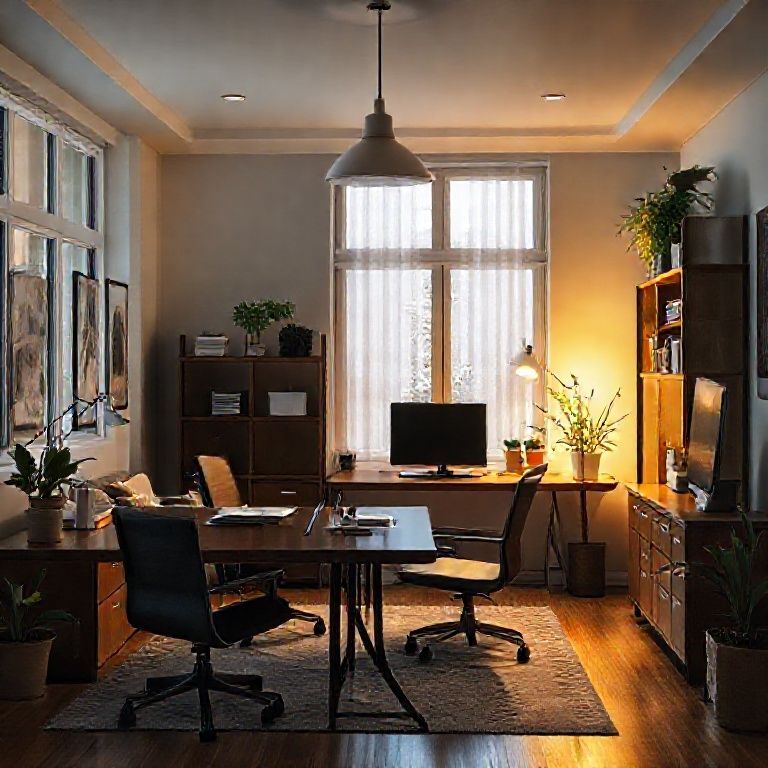
home office lighting basics
Introduction
As you settle into your home office, it’s easy to overlook one of the most crucial elements that can make or break your productivity and comfort: lighting. Home office lighting basics are often overlooked until it’s too late – a poorly lit workspace can lead to eye strain, headaches, and decreased focus. However, with a little knowledge and planning, you can create a well-lit home office that boosts your mood, increases efficiency, and supports your overall well-being.
Effective lighting in the home office is not just about brightness; it’s also about color temperature, direction, and task-specific illumination. Proper lighting can help reduce eye strain, improve concentration, and even boost your energy levels. But with so many options available, from harsh overhead lights to cozy desk lamps, choosing the right lighting for your space can be overwhelming.
In this article, we’ll delve into the home office lighting basics that every homeowner and remote worker should know about. We’ll explore the different types of lighting, how to choose the right fixtures for your space, and provide expert tips on creating a well-lit home office that supports your work style and personal preferences.
Home Office Lighting Basics
Understanding the Importance of Home Office Lighting
Proper lighting is essential for creating a productive and comfortable home office environment. It can significantly impact your mood, focus, and overall work performance. Inadequate lighting can lead to eye strain, headaches, and decreased productivity.
Types of Light Sources
When it comes to home office lighting, there are several types of light sources to consider:
Natural Light Vs. Artificial Light
Natural light is abundant in sunny areas, but it’s not always possible or feasible for everyone. On the other hand, artificial light sources such as LED bulbs, fluorescent lights, and incandescent bulbs can provide a more consistent and controlled lighting environment.
Benefits of Natural Light
Natural Light Has Several Benefits:
Boosts mood: Exposure to natural light can increase vitamin D levels, which is essential for maintaining good mental health.
Improves focus: Natural light can help regulate the body’s circadian rhythms, leading to improved concentration and productivity.
Choosing the Right Light Fixtures
When selecting light fixtures for your home office, consider the following factors:
Lumens and Color Temperature
Lumens: The amount of light emitted by a fixture. A higher lumen rating typically corresponds to brighter lighting.
Color temperature: The color tone of the light, ranging from warm (2700K-3000K) to cool (3500K-5000K). Warm white light is often preferred for reading and relaxing, while cool white light is better suited for tasks that require concentration.
Step-by-Step Guide to Choosing Home Office Lighting
1. Determine the size of your home office and the number of people who will be using it.
2. Consider the type of activities you’ll be performing in the space (e.g., reading, writing, computer work).
3. Choose a light fixture that provides sufficient lumens for the task at hand.
4. Select a color temperature that suits your needs.
Additional Tips and Considerations
Layered lighting: Use a combination of overhead lighting, table lamps, and floor lamps to create a layered lighting effect.
Dimming capabilities: Install dimmers to adjust the light level as needed.
Energy efficiency: Choose energy-efficient light fixtures to minimize your environmental impact.
Lighting for Specific Tasks
Different Tasks Require Different Levels of Lighting. for Example:
Reading: Warm white light (2700K-3000K) with a high lumen rating (1000-2000 lumens)
Computer work: Cool white light (3500K-5000K) with a medium lumen rating (500-1000 lumens)
Writing: Soft, ambient lighting with a warm color temperature (2700K-3000K) and a low to medium lumen rating (200-500 lumens)
Lighting for Home Office Layout
Consider the layout of your home office when selecting light fixtures. For example:
Place overhead lighting above workstations or desks to provide general illumination.
Use table lamps or floor lamps to create pools of light for specific tasks, such as reading or writing.
Install LED strips or under-cabinet lighting to create a warm and inviting ambiance.
Lighting for Ergonomics
Consider the ergonomics of your home office when selecting light fixtures. For example:
Place lamps at a distance that allows you to work comfortably without straining your eyes.
Use a lamp with an adjustable arm or head to direct the light exactly where needed.
Consider using a sit-stand desk or ergonomic chair to promote good posture and reduce eye strain.
Lighting for Task Illumination
Use lighting to highlight specific tasks or areas of your home office. For example:
Use a task lamp to illuminate a specific area, such as a computer monitor or writing surface.
Install LED lights under shelves or cabinets to create a warm and inviting ambiance.
Consider using a light bar or strip to create a unique and modern look.
Lighting for Color Temperature
Choose a
Conclusion
In conclusion, creating a well-lit home office is crucial for productivity and comfort. By understanding the basics of home office lighting, you can set up an inviting and functional space that supports your work style. To get started, consider investing in a combination of overhead lighting, task lighting, and ambient lighting to create a balanced and adaptable environment. Whether you’re just starting out or looking to revamp your existing setup, take the first step towards optimizing your home office lighting today by assessing your current space and making a plan for improvement.
Here are five concise FAQ pairs for “Home Office Lighting Basics”:
Q: What type of light bulb is best for a home office?
A: LED bulbs are energy-efficient and produce minimal heat, making them ideal for home offices.
Q: How many layers of lighting should I use in my home office?
A: Using three layers of lighting – ambient, task, and accent – provides optimal lighting for productivity and comfort.
Q: Can I use the same type of light bulb in both overhead and table lamps?
A: No, different types of bulbs are suited for different applications. Overhead bulbs should be dimmable and energy-efficient, while table lamp bulbs can be brighter and more focused.
Q: How far away from my desk should I place a desk lamp?
A: Place the desk lamp 6-12 inches above your workspace to provide adequate lighting without creating glare or shadows.
Q: Can I use natural light for part of my home office?
Here’s your home office lighting basics quiz:
Question 1: What type of light bulb is best suited for a home office where you spend long hours working?
A) Incandescent
B) Halogen
C) LED
Show answer
Answer: C) LED
Question 2: Which of the following lighting options provides the most even illumination in a room?
A) Table lamp with a single shade
B) Floor lamp with a directional beam
C) Overhead lighting with multiple fixtures
Show answer
Answer: C) Overhead lighting with multiple fixtures
Question 3: What is the primary benefit of using daylight bulbs in a home office?
A) Energy efficiency
B) Improved color accuracy
C) Increased brightness
Show answer
Answer: B) Improved color accuracy
Question 4: Which of the following lighting options can help reduce eye strain and improve visibility for tasks that require detailed work, such as reading or writing?
A) Bright overhead lighting
B) Dim ambient lighting
C) Task lighting with a focused beam
Show answer
Answer: C) Task lighting with a focused beam






This is exactly what I was looking for. Very helpful.
Thank you for the comprehensive breakdown. 😊